Published
-
2026-06-30 Courts, rates, and AI spending move politics, markets, and tech

Photo by Sasun Bughdaryan on Unsplash
2026-06-30 Courts, rates, and AI spending move politics, markets, and tech
The Supreme Court widened presidential control over independent agencies while treating the Fed as a special case. Markets are now reading this alongside this week’s U.S. jobs data and European inflation, while AI spending keeps pushing into chips, power, and security review. On the technology side, model vetting, cyber warnings, PC chips, and data-center power design all pointed the same way.
Politics
Trump can fire independent-agency leaders

The Supreme Court let the president fire FTC leadership, shifting the balance of power over independent agencies.
The bottom line: The White House gained more room to shape independent agencies.
What happened: In Trump v. Slaughter, the Court said the president can remove the heads of independent agencies.
Why it matters: The ruling weakens the practical independence of regulators such as the FTC and NLRB.
What to watch: Watch how far the reasoning spreads to other agencies and cases.
Cook firing at the Fed is blocked
The Court expanded presidential removal power but treated the Federal Reserve as a special case.
The bottom line: The Fed’s independence held for now.
What happened: The Court signaled that Trump cannot simply fire Lisa Cook from the Federal Reserve.
Why it matters: It preserves a line against direct political interference in monetary policy.
What to watch: Watch the lower-court remedy and any spillover beyond the Fed.
Late mail ballots can still count

The Court backed a rule that can count mail ballots arriving after election day, depending on state law.
The bottom line: State-by-state election rules still have room to differ.
What happened: The Court upheld a state rule that can count ballots received after election day.
Why it matters: It matters for close-state vote counting and the next round of election litigation.
What to watch: Watch for copycat rules, lawsuits, and new state-level changes.
Geofence warrants need privacy protections

The Court imposed Fourth Amendment limits on warrants that sweep up location data.
The bottom line: Location-data searches face a higher legal bar.
What happened: The Court rejected an open-ended reading of geofence warrants.
Why it matters: It affects both police practice and privacy protections for location data.
What to watch: Watch how federal and state investigators adjust their warrant practices.
Carroll verdict survives Trump’s appeal
The Court left an adverse civil verdict in place and kept the Trump-related liability fight alive.
The bottom line: Trump’s legal exposure is still not over.
What happened: The Court declined to hear Trump’s appeal in the E. Jean Carroll case.
Why it matters: The decision keeps pressure on the boundaries of civil liability in high-profile political cases.
What to watch: Watch the remaining damages fights and the next step from Trump’s legal team.
Economy
U.S. jobs data is the key rate clue

Markets are treating the U.S. payrolls data as the cleanest clue to the Fed's next move.
The bottom line: Payroll strength will steer rate expectations into July.
What happened: U.S. labor-market releases moved to the front of the market calendar.
Why it matters: A softer labor print would revive cut bets; a stronger one would keep higher-for-longer alive.
What to watch: Watch payrolls, unemployment, and wage growth together.
Lagarde defends the ECB’s rate hike
Lagarde argued the ECB still has work to do while inflation remains sticky.
The bottom line: The ECB looks set to stay cautious until inflation clearly cools.
What happened: At Sintra, Lagarde defended the ECB’s rate stance.
Why it matters: Euro-area rates and the euro still hinge on the next inflation prints.
What to watch: Watch for follow-up remarks and the next round of data before the July meeting.
Spain’s inflation came in hotter than expected

Spanish price growth ran hotter than expected, nudging euro-area disinflation hopes back a bit.
The bottom line: Euro-area price pressure is not fully gone.
What happened: June inflation in Spain came in stronger than markets expected.
Why it matters: Sticky inflation in a major euro-area economy makes early ECB easing harder to justify.
What to watch: Watch the euro-area flash CPI and wage stickiness.
South Korea is building a huge AI chip hub
Samsung and SK Hynix are expanding spending to deepen South Korea's AI chip supply chain.
The bottom line: AI demand is still pulling national industrial policy with it.
What happened: South Korea moved further into a large-scale chip infrastructure push.
Why it matters: It affects the AI supply chain, power use, land use, and export competition.
What to watch: Watch buildout timing and how power and labor constraints are handled.
Chipmaker shares led the AI rally

Chip stocks such as SK Hynix and Samsung stayed at the center of the AI trade.
The bottom line: The AI trade is still being led by chips and memory supply.
What happened: Chipmakers posted a powerful first-half run as AI spending stayed hot.
Why it matters: AI capex remains a dominant equity-market theme.
What to watch: Watch whether memory prices and capex plans keep supporting the rally.
Technology
Five Eyes warns that AI cyberattacks are near
The Five Eyes warning points to AI lowering the cost of offensive cyber work.
The bottom line: AI is lowering the cost of attack faster than the cost of defense.
What happened: Five Eyes officials warned that AI is making sophisticated cyberattacks more accessible.
Why it matters: If the barrier to entry falls, both companies and governments have to redesign defenses.
What to watch: Watch whether national cyber agencies formalize AI-aware defense standards.
OpenAI and Anthropic are slowing model access
OpenAI and Anthropic's model releases are running into government review and political pushback.
The bottom line: Model launches now have to clear security scrutiny, not just product deadlines.
What happened: OpenAI and Anthropic limited access to some new models while security review continued.
Why it matters: Distribution of frontier AI is getting more tightly linked to government oversight.
What to watch: Watch whether the review becomes routine and delays future launches.
Nvidia unveils RTX Spark for PCs
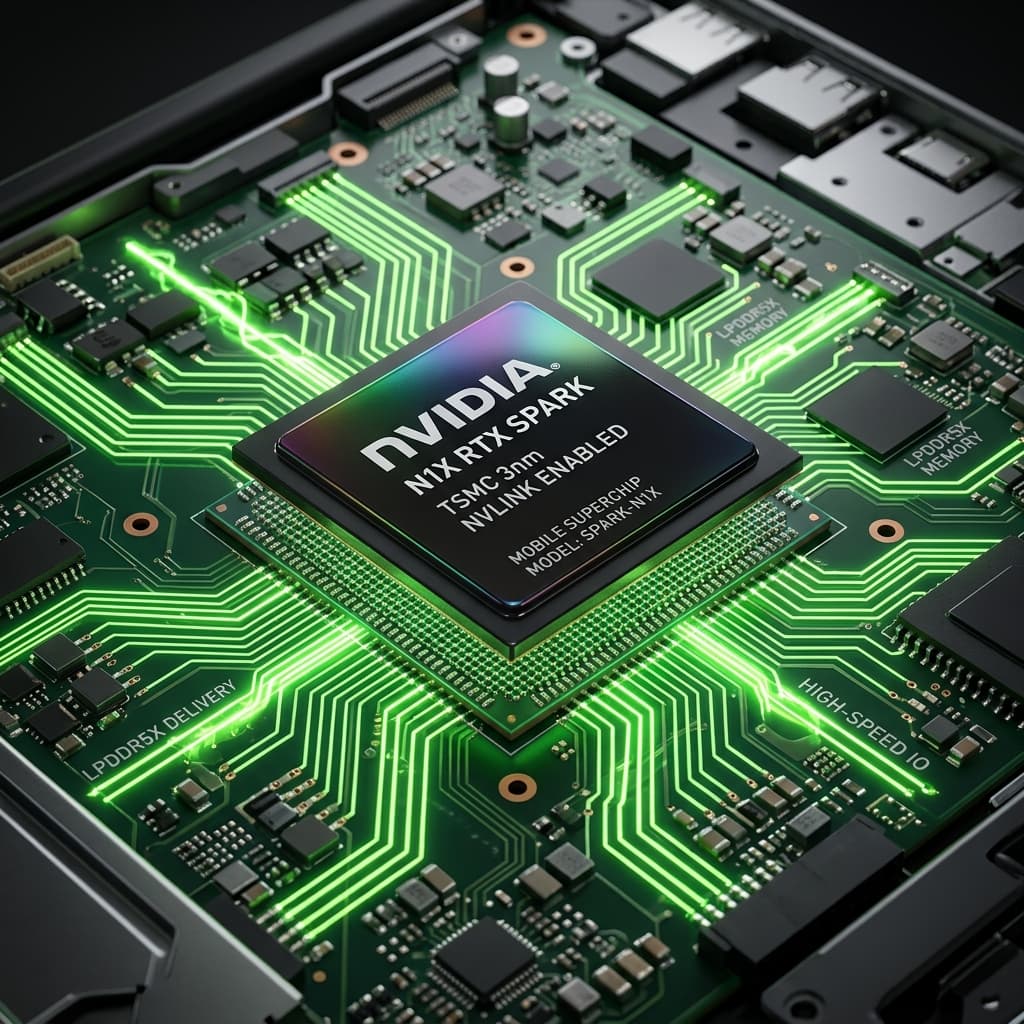
A new small-form-factor AI chip points to more local inference on PCs.
The bottom line: AI is moving from the cloud onto the device.
What happened: Nvidia’s new PC-focused silicon pushes local AI execution further.
Why it matters: More on-device inference changes latency, privacy, and power design.
What to watch: Watch OEM adoption and the actual shipment timeline.
Codex points to faster agentic AI adoption

The study tracks how quickly agentic AI usage is becoming routine in development work.
The bottom line: AI is shifting from a chat interface to a work executor.
What happened: Codex-style usage grew as agentic developer workflows spread.
Why it matters: It changes how teams think about automation, not just code generation.
What to watch: Watch for the same workflow pattern spreading beyond software teams.
AI data centers are hitting a power-design shift

High-density GPU racks are making power delivery itself a performance constraint.
The bottom line: The next AI bottleneck is power and distribution.
What happened: Data-center design is shifting toward new rack-level power conversion and delivery schemes.
Why it matters: Delivery speed now depends as much on power architecture as on GPU performance.
What to watch: Watch whether SSTs and alternatives to 48V move from papers into deployment.
Cross-cutting read
- Executive power widened for independent agencies, but the Fed was treated differently.
- AI has moved from feature competition into an infrastructure race that includes chips, power, and security.
- Investors are using payrolls and inflation prints as a test of whether AI capex can stay hot.
What to watch next
- How lower courts handle the Cook and Slaughter cases will determine how far the rulings reach.
- U.S. payrolls and euro-area inflation will decide whether July rate expectations move higher or lower.
- Whether AI model vetting and cyber warnings become durable policy, or fade after the news cycle.