Published
-
2026-05-22 AI regulation delay and high crude prices
Image: Google Blog, I/O 2026 developer highlights
2026-05-22 AI regulation delay and high crude prices
Over the past 24 to 48 hours, in politics, AI and financial regulations in the United States and tensions with China and Taiwan have progressed simultaneously, in the economy, the resurgent inflation and worsening interest rate outlook have shaken the market, and in technology, with Google I/O at the center, the trend of AI moving from “conversation” to “action” has further strengthened. Overall, this is a phase in which policy, market, and product announcements are interconnected.
Politics
Trump administration postpones strengthening AI oversight

Original article reporting on the postponement of an executive order to strengthen AI and cybersecurity oversight.
What happened: Axios reports that President Trump has delayed signing an executive order that would increase oversight of AI and cybersecurity. There is a growing sense of wariness about AI among some of the government’s supporters, and adjustments within the government continue.
Why it matters: AI is being treated not only as a matter of “promoting growth” but also as an issue of “security, elections, and employment,” which will determine the strength of future regulations.
What to watch: The next signal is whether AI procurement requirements become concrete rules for model use, log retention, cyber controls, and post-deployment monitoring.
US administration strengthens measures against financial crime
White House announcement on combating illicit fund transfers and financial crime.
What happened: The White House announced an executive order to strengthen efforts to combat illicit fund transfers and money laundering within the U.S. financial system. The focus is on information sharing between banks and non-banks and strengthening of monitoring.
Why it matters: Tackling sanctions evasion, money laundering and illegal transfers is back on the political agenda, potentially leading to further tightening of financial infrastructure.
What to watch: Watch whether the stricter identity and AML posture extends beyond banks into payments, crypto assets, and cross-border remittances.
Prime Minister Starmer loses centripetal force within his party
An article from AP summarizing the turmoil within the British Labor Party and the pressure on Prime Minister Starmer.
What happened: The Associated Press reported that British Prime Minister Keir Starmer is losing unifying power within his party after a crushing defeat in local elections. He has emphasized that he will continue to work.
Why it matters: In the UK, a combination of dissatisfaction over fiscal discipline, immigration and public service reform risks destabilizing the government’s policy direction.
What to watch: The key question is whether cabinet changes and party pressure alter concrete policy on immigration, taxation, and EU relations rather than only the political tone.
Taiwan cautiously expects defense equipment sales

Reuters reports that Taiwan's Ministry of Defense has expressed cautious expectations about arms sales from the United States.
What happened: According to Reuters, Taiwan’s Ministry of Defense expressed cautious hope for arms sales from the United States. Defense cooperation with the United States is an ongoing issue that affects deterrence across the Taiwan Strait.
Why it matters: The deterrence balance in the Taiwan Strait has implications not only for U.S.-China relations but also for semiconductors, shipping, and defense procurement.
What to watch: Track sanctions and export-control changes separately from actual procurement delays, because semiconductors, logistics, and defense will feel the impact on different timelines.
China reasserts Taiwan issue as “top priority issue”
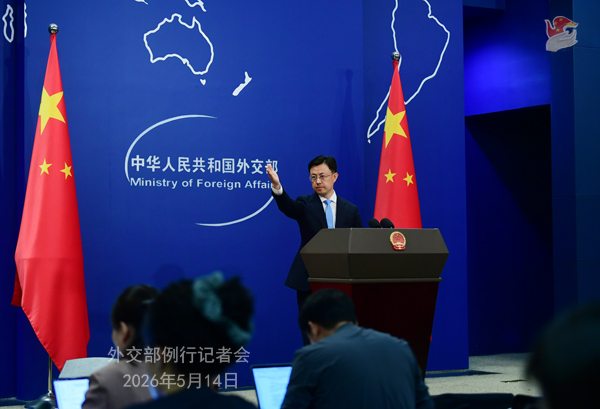
An article from Reuters Connect that explains the role of the Taiwan issue in US-China relations.
What happened: Reuters reported that China has positioned Taiwan as the most important issue in U.S.-China relations and has maintained that position even after the meeting with Trump. No major breakthrough has been seen in discussions between the leaders.
Why it matters: As the focus of China policy expands from trade to security, diplomatic events become leading market and regulatory indicators.
What to watch: U.S.-China tension should be judged by whether export controls, cloud access, and communications-equipment supply chains begin moving together.
economy
Nomura predicts no Fed rate cut in 2026

Reports that Nomura expects the Fed to not cut interest rates in 2026 due to the resurgence of inflation.
What happened: Reuters reports that Nomura believes the US Federal Reserve is unlikely to cut interest rates in 2026. This is because inflation is picking up again and policy makers are taking a cautious stance.
Why it matters: Remaining high interest rates have a direct impact on stock valuations, mortgages, corporate bond issuance, and startup financing.
What to watch: The issue is whether higher long-term yields are a temporary market move or a level that starts changing financing and capital-investment assumptions.
Fed proposes new framework for payment accounts
Fed Announcement on New Framework for Payment Account Access by Nonbank Businesses.
What happened: The US Federal Reserve has proposed a new framework for opening payment accounts for non-bank businesses that meet certain criteria. The issue is improving access for fintech and payment providers.
Why it matters: Enabling non-bank players to enter payment infrastructures changes both competition and oversight.
What to watch: The practical signal is whether lower entry barriers for payments, remittances, BaaS, and crypto assets arrive with supervisory requirements that offset the benefit.
Oil prices continue to rise due to stalled US-Iran negotiations

Energy market article stating that crude oil prices have risen due to stalled US-Iran negotiations.
What happened: Reuters reported that US-Iran peace and nuclear negotiations have failed to make progress, and oil prices are on the rise. Middle East risks are once again being recognized as a supply concern.
Why it matters: Crude oil has cascading effects on transportation costs, chemicals, electricity, aviation, and household price expectations.
What to watch: Oil risk should be tracked through inventories, OPEC+ supply posture, and shipping-insurance costs, not only the headline crude price.
US stocks fall on inflation concerns
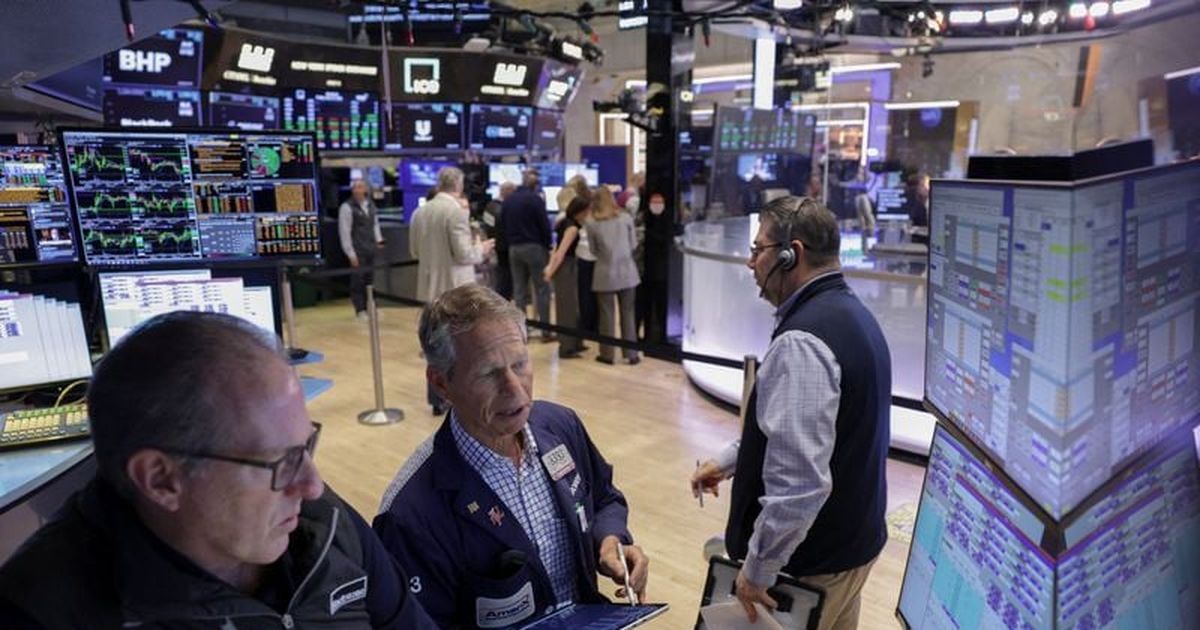
A market article stating that the situation in the Middle East and high oil prices have increased concerns about inflation in the US stock market.
What happened: Reuters reported that stock markets fell on fears of a resurgence in inflation. High oil prices are reinforcing the “long-term high interest rate” scenario.
Why it matters: Stock markets are more likely to move based on interest rates and inflation than on the economy itself.
What to watch: For growth stocks, the test is whether AI demand can offset the valuation pressure from higher discount rates.
Japan’s PMI, economic slowdown and upward price pressure

S&P Global's latest PMI report showing slowing economic expansion and upward pressure on prices in Japan.
What happened: S&P Global’s preliminary PMIs showed Japan’s economic expansion slowing and services activity flattening. On the other hand, upward pressure on sales prices remains strong.
Why it matters: A situation in which prices rise despite weak growth makes policy decisions and corporate pricing strategies difficult.
What to watch: In Japan, watch whether weak PMI data remains an inventory adjustment or spreads into pricing, hiring, and capital-spending decisions.
Technology
Introducing Gemini 3.5 Flash
Official blog summarizing AI announcements for developers at Google I/O 2026.
What happened: At Google I/O, Google announced updates to its Gemini 3.5 Flash series that emphasize fast response times. This is a model enhancement that emphasizes low latency and practicality.
Why it matters: The competitive axis of model performance has shifted from mere benchmarking to “cheap, fast, and practical use.”
What to watch: Gemini updates matter if they improve response speed, inference cost, and tool invocation inside existing workflows, not only in benchmark tables.
Gemini app accelerates agentization

Google's official page that summarizes updates to the Gemini app and related functions.
What happened: Google expanded the Gemini app from a passive chat to an agent-like experience that returns daily briefs and advance suggestions.
Why it matters: Users are starting to expect AI to be proactive and get things done, not just ask questions.
What to watch: The shift to watch is from one-shot prompt interfaces toward assistants that retain user state, history, and workflow context.
AI agent and new search box in Search

Official page that summarizes the list of Google I/O 2026 announcements and updates on search and AI experiences.
What happened: Google built more AI agent features into the search experience and updated the very way you use the search box. It is a flow that not only searches, but also integrates summarization, comparison, and execution.
Why it matters: Keyword optimization alone is not enough to increase search traffic; structured information that can be read by AI is becoming increasingly important.
What to watch: AI search impact should be measured by citation and answer-generation frequency, not only by traffic changes from conventional search.
Redesign your development path with Antigravity and Managed Agents

Announcing new paths for developers such as Antigravity, Managed Agents, and AI Studio.
What happened: Google brought to the fore an Antigravity agent experience for developers, Managed Agents in the Gemini API, and workflows for Android in AI Studio.
Why it matters: In AI, the focus of competition has shifted from “model selection” to “how to operate agents.”
What to watch: Developer agents should be judged by whether they connect specification work, prototyping, tests, and monitoring into one durable process.
OpenAI teams up with Dell to bring Codex to hybrid/on-prem

OpenAI and Dell announce partnership to extend Codex to enterprise hybrid/on-premises environments.
What happened: Through our partnership with OpenAI, Dell is moving towards bringing AI workloads, including Codex, into enterprises’ existing environments and where their data resides. The theme is optimal implementation for companies.
Why it matters: Generative AI is being deployed not only in SaaS but also in environments with strict security requirements.
What to watch: Enterprise adoption will turn on four checkpoints: data location, auditability, permission management, and inference cost.
Cross-sectional view
- U.S. AI and financial policy is simultaneously strengthening regulations and opening up infrastructure, forcing both AI businesses and fintechs to redesign their compliance.
- Due to the combination of high crude oil prices and persistently high interest rates, economic news should be read as a resurgence in inflation expectations rather than a one-off economic judgment.
- The Google I/O series of announcements marks a milestone in AI’s transition from “products that answer” to “products that act,” changing the assumptions of search, development, and business flows.
- Movements in Taiwan, China, and the United States are directly linked to semiconductor and logistics supply networks, so they should be followed not only as geopolitical news but also as business continuity risks.
Uncertainty to track
- To what extent will the Trump administration’s plan to strengthen AI oversight actually extend to model use and procurement?
- Will the US-Iran negotiations and oil prices settle down within the next few days, or will the scenario of a resurgence of inflation become more likely?
- Among the Google I/O announcements, prices, regions, and official release dates for Gemini 3.5 Flash and various agent functions.