Published
-
2026-06-25 Trump politics pulls elections, housing, and AI together
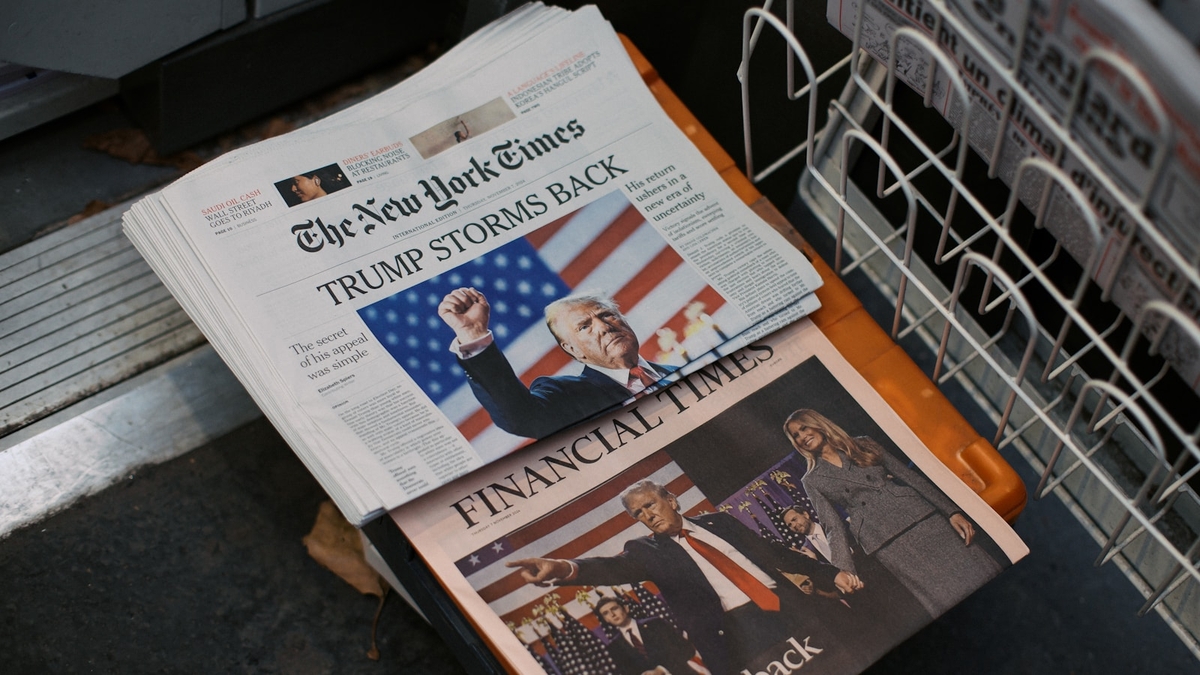
Photo by The Now Time on Unsplash
2026-06-25 Trump politics pulls elections, housing, and AI together
In the U.S., court rulings kept reshaping voting rules and immigration enforcement while Congress moved on Iran funding, war powers, and housing. Markets reacted to weaker tech stocks and softer oil, mortgage rates eased a bit, and inflation still sat above 4%. On the technology side, AI showed up as a security problem, a military priority, and a product race all at once.
Politics
Voting proof requirement blocked
A federal judge struck down the core of the order requiring proof of citizenship for voter registration.
The bottom line: A federal judge blocked the order requiring proof of citizenship for voter registration.
What happened: A federal court in Boston ruled that election rules belong to Congress and the states, not the White House, and permanently blocked the core of the order.
Why it matters: The fight over voter registration and mail ballots goes straight to the 2026 midterm map.
What to watch: Watch for an appeal and for any Supreme Court move on related mail-ballot cases.
Immigration court arrests barred
A federal judge in San Francisco barred immigration arrests at immigration courts nationwide.
The bottom line: A federal judge in San Francisco blocked immigration arrests at immigration courts nationwide.
What happened: The court said the administration had not given enough justification and invalidated a policy that had upended long-standing protections.
Why it matters: The ruling affects whether people feel safe showing up for hearings, so it can change how immigration enforcement works in practice.
What to watch: Watch for a revised directive or for similar injunctions in other courts.
Rutte visits Trump
Ahead of the next summit, NATO chief Mark Rutte tried to steady relations with Trump.
The bottom line: NATO chief Mark Rutte sought to reset ties with Trump.
What happened: Trump is criticizing NATO while the U.S. reviews its Europe deployment and allies weigh their response to the Iran conflict.
Why it matters: Changes in burden-sharing and force posture affect how the alliance actually operates.
What to watch: Watch the U.S. force review in Europe and any new defense-spending target at the summit.
Senate rebukes Iran war
The Senate passed a war powers resolution aimed at limiting military action on Iran.
The bottom line: The Senate passed a war powers resolution to block military action against Iran.
What happened: The vote passed 50 to 48, with four Republicans joining Democrats.
Why it matters: Congress is now pushing back both on the war itself and on how it gets funded.
What to watch: Watch the House and White House response, and whether the funding request gets conditioned.
White House seeks $87.6B
The White House asked Congress for a supplemental package centered on Iran war costs.
The bottom line: The White House asked Congress for a supplemental package worth $87.6 billion.
What happened: The package bundles defense spending with farm aid, Ebola response money, and recovery costs for Washington, D.C.
Why it matters: Bundling war costs with domestic items raises the political cost of the vote.
What to watch: Watch whether House and Senate appropriators split the package apart.
Economy
Wall Street ends mixed
U.S. stocks finished mixed as tech shares fell and oil prices eased.
The bottom line: U.S. stocks ended mixed as losses in Microsoft and other tech names weighed on the indexes.
What happened: The S&P 500 edged lower, the Dow rose, and the Nasdaq fell 0.4%, while softer oil eased inflation worries.
Why it matters: High valuations in AI names and calmer oil prices are now pulling the market in opposite directions.
What to watch: Watch the PCE inflation data and whether mega-cap tech rebounds.
House passes housing bill
A bipartisan housing bill aimed at lower costs cleared the House.
The bottom line: A bipartisan bill aimed at lowering housing costs cleared Congress.
What happened: The bill bundles deregulation, construction incentives, renter protections, and local funding.
Why it matters: It is one of the larger federal moves in a housing market still short on supply.
What to watch: Watch whether Trump signs it and how quickly the money can flow.
30-year mortgage rate dips
The average 30-year fixed mortgage rate fell to 6.47%.
The bottom line: The average 30-year fixed mortgage rate slipped to 6.47%.
What happened: Lower Treasury yields after the Iran scare eased mortgage rates as well.
Why it matters: Borrowing gets a little cheaper, but home sales remain near depressed levels.
What to watch: Watch the 10-year Treasury yield and the pace of existing-home sales.
Fed signals possible hikes
Half of the Fed participants signaled support for rate hikes later this year.
The bottom line: Half of the Fed participants signaled support for rate hikes later this year.
What happened: The statement held steady, but the tone moved more hawkish than before.
Why it matters: With inflation at a three-year high, financial conditions could tighten again.
What to watch: Watch the next meeting message and the Treasury-yield reaction.
Inflation tops 4%
U.S. consumer prices rose 4.2% year over year in May, the highest in three years.
The bottom line: U.S. consumer prices rose 4.2% year over year in May, the highest in three years.
What happened: Higher oil and gasoline prices pushed the index up, alongside gains in clothing, airfares, and electricity.
Why it matters: Energy prices are now hitting both household budgets and the Fed’s policy choices.
What to watch: Watch whether oil falls further and whether June core inflation cools.
Technology
Google stops AI hack
Google said it stopped an attack that used AI to hunt for unknown weaknesses.
The bottom line: Google said it stopped an attack that used AI to probe for unknown weaknesses.
What happened: The attackers were searching for zero-day weaknesses and trying to get around two-factor authentication.
Why it matters: Once attackers use AI too, the assumptions behind cyber defense change fast.
What to watch: Watch for more enterprise defense tools and more reports of similar attacks.
Push to ease Anthropic limits
A public letter urged easing Anthropic's latest model limits for cyber defense.
The bottom line: A public letter asked for Anthropic’s latest model limits to be eased for cyber defense.
What happened: Adobe, Nvidia, and others argued that export limits could weaken U.S. defensive capability.
Why it matters: Rules that improve AI safety can also choke off defensive uses.
What to watch: Watch whether the White House keeps the limits or adjusts them.
Trump pushes military AI
Trump told the military and security agencies to move faster on AI adoption.
The bottom line: Trump told the military and security agencies to move faster on AI.
What happened: He ordered a review of autonomous-weapon rules while also barring illegal surveillance of Americans.
Why it matters: The administration is now trying to balance speed of adoption with civil-liberties limits in one policy package.
What to watch: Watch how the Pentagon rewrites the guidance and whether contractor terms change.
Nvidia bets on AI PCs
Nvidia unveiled a new RTX Spark chip aimed at bringing AI features onto PCs.
The bottom line: Nvidia unveiled RTX Spark, a chip designed to bring AI features onto PCs.
What happened: Microsoft and Dell are packaging new machines around local AI agents.
Why it matters: AI investment is moving from data centers toward the personal device.
What to watch: Watch the fall shipment schedule and rival chips from Intel and AMD.
Apple refreshes Siri
Apple used WWDC to show off a smarter Siri and new photo-editing features.
The bottom line: Apple used WWDC to show off a smarter Siri and new photo-editing features.
What happened: The company previewed a new Siri that uses Gemini and treated the event as Tim Cook’s last WWDC.
Why it matters: Apple is finally joining the AI race in earnest, which sharpens the fight over the OS experience.
What to watch: Watch the timing in the EU and China, plus how polished the fall release looks.
Cross-cutting read
- The Iran fight now runs through war powers, budgets, allies, oil, and inflation in the same news cycle.
- Housing and rates look separate, but both feed back into the same household cost pressure through yields and prices.
- AI is moving beyond product launches into cyber defense rules and military use cases.
What to watch next
- Whether the Supreme Court takes up the voting-rule and immigration injunctions.
- Whether PCE inflation and oil prices change the rate-cut path again.
- How Apple, Nvidia, Anthropic, and Google turn current AI policy into shipping products.