Published
-
2026-06-02 Iran tensions and AI fervor jolt markets, China curbs tighten
Photo by sina drakhshani on Unsplash
2026-06-02 Iran tensions and AI fervor jolt markets, China curbs tighten
At the same time that Iran tensions moved oil, FX, and stocks, news on AI semiconductors and cloud rules piled up, making U.S.-China rivalry and supply-chain reallocation easier to see. In politics, U.S.-Iran talks and China security policy moved in parallel; in the economy, higher oil prices and trade talks did too; and in technology, Nvidia and Anthropic reflected two simultaneous forces: expanding AI investment and tighter export controls.
Politics
Trump suggests Iran talks are continuing

Trump signaled that talks with Iran are continuing, showing military pressure and diplomacy running in parallel.
What happened: Trump said dialogue with Iran is continuing, bringing speculation about a ceasefire or a limited deal back to the market’s attention.
What happened: The message signaled ongoing talks, but the substance and timing of negotiations remain unclear.
Why it matters: Middle East developments move oil, FX, and stocks directly, so a single comment can swing expectations sharply.
Why it matters: If diplomacy stalls, a risk premium built around military tension is likely to remain.
What to watch: The next question is how closely U.S. demands and Iran’s room for concessions can converge.
What to watch: Markets will react differently depending on whether a deal text becomes more concrete or whether practical talks appear to stall.
Iran looks for a limited deal

Iran is reportedly looking for a limited deal to ease sanctions pressure, keeping the focus on the practical side of negotiations.
What happened: Iran is said to be exploring room for a limited deal, rather than a full settlement, in order to ease economic pressure.
What happened: The key question is how far sanctions relief and nuclear-related operating conditions can be separated.
Why it matters: Even a limited deal could temporarily ease worries about oil supply and neighboring countries’ caution.
Why it matters: If progress is only marginal, politics will still read as ongoing talks, while markets will still read as continuing tension.
What to watch: Watch whether the negotiating agenda narrows to sanctions, uranium enrichment, or stronger monitoring.
What to watch: The size of the next market reaction will depend on whether practical negotiations continue.
Hegseth warns about China’s military buildup

Hegseth warned about China's military buildup and urged allies to raise defense spending.
What happened: At an Asian security forum, Hegseth expressed strong concern about China’s military expansion.
What happened: The U.S. is still pressing allies to increase defense spending.
Why it matters: This was not just a diplomatic speech.
Why it matters: It was a policy message about who should carry how much of the Indo-Pacific defense burden, and markets can read it as a sign that defense-industry support and China controls on semiconductors are likely to continue.
What to watch: The key question is how far Japan, South Korea, and Australia will go on additional spending and joint exercises.
What to watch: It is also worth watching whether U.S. pressure becomes tied to tariffs or tech restrictions.
U.S. and Chinese militaries keep talking in Hawaii

U.S. and Chinese military officials met in Hawaii and confirmed they are keeping communication lines open to avoid miscalculation.
What happened: U.S. and Chinese military officials met in Hawaii and continued talks aimed at avoiding accidental air or sea clashes.
What happened: Even as military friction rises, a minimum communication channel is still being maintained.
Why it matters: U.S.-China rivalry is not only about trade, but also about managing the risks of military misjudgment and accidental incidents.
Why it matters: If dialogue breaks down, tensions in the Taiwan Strait and the South China Sea could jump quickly.
What to watch: What matters next is whether practical hotlines are working and whether there is any joint statement.
What to watch: The longer the meetings continue, the more likely it is that basic crisis management is still holding.
China steps up patrols east of Taiwan
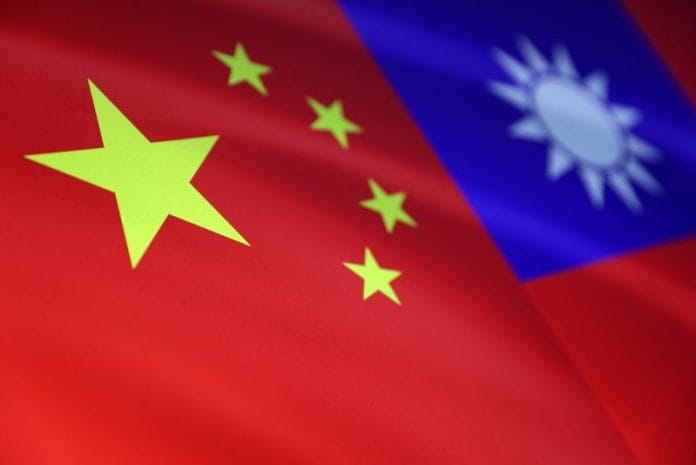
China patrolled east of Taiwan and signaled its reaction to Japan-Philippines maritime cooperation.
What happened: China carried out patrols in waters east of Taiwan in response to Japan and the Philippines moving closer on maritime cooperation.
What happened: The move can be read both as an exercise in maritime order and as a warning to neighboring countries.
Why it matters: The contest is spreading beyond the Taiwan Strait to effective control over surrounding waters and freedom of navigation.
Why it matters: Even local patrols can easily escalate into diplomatic friction if there is an accidental encounter.
What to watch: The key is how Japan, the Philippines, and Taiwan strengthen patrols and joint exercises.
What to watch: If Chinese patrol frequency rises, the region’s tension level will be easier to see.
Economy
Oil spikes on reports of stalled Iran talks

Oil jumped on reports that U.S.-Iran talks had halted and on risk of a Strait of Hormuz blockade.
What happened: Uncertainty over the direction of U.S.-Iran talks pushed oil up by about $5 a barrel in a single day.
What happened: Markets reacted by pricing in supply disruptions and blockade risk.
Why it matters: Higher oil prices spill into inflation through transport, manufacturing, and energy costs.
Why it matters: The longer the geopolitical shock lasts, the harder it is to read the path back to lower inflation.
What to watch: The next thing to watch is whether Middle East shipping sees any real damage.
What to watch: The impact will differ depending on whether the move is just a temporary spike or becomes part of supply-chain planning.
U.S. crude exports hit record high in May

U.S. crude exports reached a record level in May as global supply destinations were reshuffled.
What happened: U.S. crude exports reached record levels in May, showing a reshuffling of global supply destinations.
What happened: Instability in the Middle East is pushing more demand toward U.S. crude.
Why it matters: Higher U.S. exports affect not just domestic supply-demand balances, but also procurement strategies in Asia and Europe.
Why it matters: The more outlets supply has, the easier it is for price swings to spread.
What to watch: The question is whether the export surge turns out to be a one-off spike or a sustained trend.
What to watch: Refining capacity and transport costs could become the next constraints.
The dollar holds firm while markets weigh geopolitics and policy

The dollar stayed firm as markets weighed Iran tensions against central-bank policy.
What happened: The dollar did not surge, but it held its ground as markets weighed geopolitical risk and monetary policy.
What happened: Investors are watching not only Iran, but also the next round of central-bank messaging.
Why it matters: Dollar strength or weakness affects commodity prices, import prices, and capital flows in emerging markets.
Why it matters: Volatility tends to rise when geopolitical tension and central-bank positioning collide.
What to watch: If U.S. rate expectations or demand for safe assets strengthen, dollar pressure to the upside could return.
What to watch: If the Middle East calms down, there is room for risk appetite to ease it back.
Stocks stay near highs on AI optimism

AI optimism kept stocks near record highs despite Iran tensions.
What happened: The stock market stayed near highs thanks to expectations for AI investment, even as Iran tensions shook sentiment.
What happened: Long-term growth themes are supporting the market more than short-term geopolitical noise.
Why it matters: How markets balance war risk against AI growth will shape capital flows.
Why it matters: If large-cap tech keeps outperforming, the broader index should remain relatively resilient.
What to watch: Watch whether higher energy prices start to weigh on corporate profits or whether AI-related investment enthusiasm cools.
What to watch: If earnings guidance is revised down, it will be harder to keep the market at high levels.
U.S. and India move trade talks toward the finish line

U.S.-India trade talks moved into the final stretch as tariff terms were being settled.
What happened: U.S.-India trade talks are in the final stretch as tariff and relief terms are sorted out.
What happened: If an agreement is reached, uncertainty for companies in both countries will fall further.
Why it matters: India is drawing attention as a destination for diversification away from China, so regulatory alignment with the United States directly affects investment decisions.
Why it matters: Once tariff terms are in place, supply-chain restructuring tends to get a tailwind.
What to watch: The key issues are the handling of Section 301 and which products become bargaining chips.
What to watch: If the announcement is delayed, markets will again read it as “close, but not final.”
Technology
Nvidia launches a new chip for AI PCs

Nvidia unveiled a new chip that puts AI processing directly into personal computers.
What happened: Nvidia rolled out a new chip that puts AI processing front and center on consumer PCs.
What happened: The shift toward on-device inference is strengthening alongside cloud-based AI.
Why it matters: AI PCs could reshape semiconductor, OS, and application design at the same time.
Why it matters: If on-device AI keeps growing, the competition between cloud-billed and local processing models will become clearer.
What to watch: The next focus is real benchmarks, pricing, and when the PCs carrying the chip will ship.
What to watch: Whether software follows through will determine whether this is just an announcement or the start of a larger market shift.
The U.S. closes a loophole in Nvidia’s China shipments

The U.S. moved to block workarounds that let Nvidia chips reach Chinese firms through routes outside China.
What happened: The U.S. is moving to close the loophole that let Nvidia AI chips for Chinese firms flow in from outside China.
What happened: The effort expands restrictions from direct exports to rerouted supply paths as well.
Why it matters: This shows the U.S.-China AI race has entered a stage that includes managing supply routes, not just product performance.
Why it matters: It also raises compliance burdens for semiconductor makers and distributors.
What to watch: The important question is how far the actual rule language and enforcement scope will go.
What to watch: If China speeds up domestic substitutes, supply-chain fragmentation will deepen further.
Anthropic files confidentially for an IPO

Anthropic filed confidentially for a U.S. IPO, signaling a new phase in the race to list AI companies.
What happened: Anthropic reportedly filed confidentially in preparation for a U.S. IPO.
What happened: The timing and valuation are not public yet, but the preparations are becoming concrete.
Why it matters: Funding for generative AI companies is moving from large private rounds toward the public market.
Why it matters: That raises the bar not just against OpenAI, but also in how investors evaluate the companies.
What to watch: The focus is on when the filing becomes public, as well as revenue growth and the outlook for narrowing losses.
What to watch: If the listing conditions are tough, it will become a test of how durable the AI boom really is.
EU proposal would narrow access for U.S. cloud giants in strategic procurement

The EU is considering narrowing access for Amazon, Google, and other U.S. cloud giants in strategic procurement.
What happened: The EU is considering a direction that would narrow access for Amazon, Google, and other U.S. cloud giants in strategic cloud procurement.
What happened: The bloc is clearly leaning toward data sovereignty and security.
Why it matters: Cloud is the foundation for AI, government, and industrial data, so procurement conditions translate directly into market share.
Why it matters: If rules tighten, European alternatives are likely to get a lift.
What to watch: Watch how much restriction ends up in the final draft and whether member states line up behind it.
What to watch: The issue could also evolve into a transatlantic digital-trade friction point.
Gas leak at SK Hynix plant raises supply-chain concerns

A gas leak at an SK Hynix plant raised concerns about manufacturing and supply-chain impact.
What happened: A gas leak was reported at an SK Hynix plant, and the exposure of workers as well as the effect on operations were confirmed.
What happened: Semiconductor manufacturing involves many fine-grained steps, so even a short incident can affect production plans.
Why it matters: Memory chips are in focus because demand for AI servers and PCs is rising, and plant trouble directly feeds supply concerns.
Why it matters: Even a single accident can trigger reviews of components, equipment, and insurance.
What to watch: The key questions are whether operations were halted, how fast recovery is expected, and whether customer delivery schedules are affected.
What to watch: Depending on the scale of the accident, memory prices and inventory strategy could also be affected.
Cross-cutting view
- Iran tensions are spreading faster than politics into oil, FX, and stocks. Geopolitical risk is directly feeding back into inflation and higher corporate costs.
- In AI, Nvidia’s product launch and Anthropic’s IPO preparations signal continued capital inflows, while U.S. restrictions on China and EU procurement limits are strengthening control over use cases and supply routes.
- U.S.-China rivalry has become multi-layered, spanning tariffs, export controls, military dialogue, and patrols at sea. Whether channels for miscalculation avoidance survive is the next major inflection point.
- On trade, progress in U.S.-India talks could widen the set of alternatives to China dependency. Supply-chain realignment cannot be separated from tariffs or security.
Items to track
- Whether U.S.-Iran talks move toward a limited deal or remain uncertain.
- Whether higher oil prices end as a temporary risk premium or trigger real changes in transport, insurance, and inventories.
- How far China-focused restrictions on Nvidia catch supply chains routed through third countries.
- How strict the EU cloud procurement rules become in the actual enforcement stage.
- Whether U.S.-India talks reach agreement on tariffs or whether the practical deal slips into next week or later.