Published
-
How to Read Halal Across Islamic Cultural Spheres
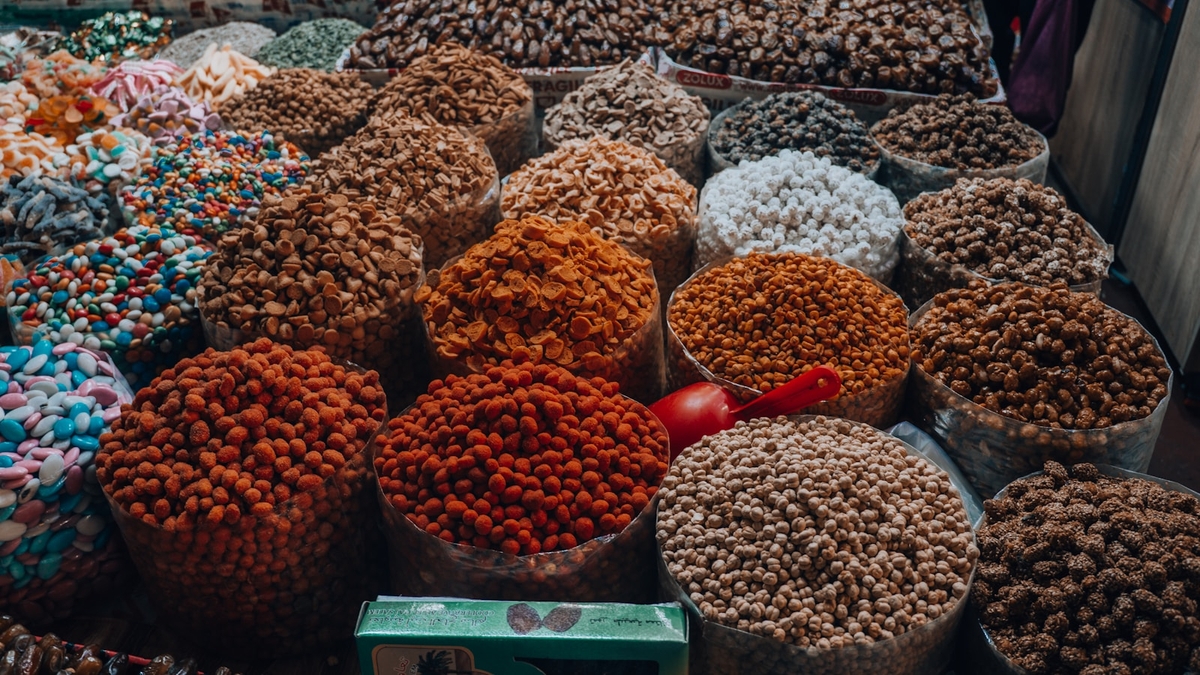
Photo by Filiz Elaerts on Unsplash
How to Read Halal Across Islamic Cultural Spheres
1. Executive Summary
Halal means what Islamic law permits. But in the contemporary world, halal cannot be reduced to avoiding pork and alcohol. It organizes questions of ingredients, slaughter, kitchen tools, logistics, labeling, finance, medicine, cosmetics, tourism, school meals, disaster relief, and workplace prayer. It gives Muslims a way to distinguish what is allowed, what is doubtful, and what should be avoided across ordinary life. Source: The Qur’an addresses lawful and good food in 2:168, prohibited foods in 2:173 and 5:3, and the food of the People of the Book in 5:5. See Quran.com 2:168, 2:173, 5:3, and 5:5.
Modern halal has a double structure: religious practice and quality assurance. On the religious side, eating becomes a way to affirm obedience, bodily purity, and community belonging. On the institutional side, firms, certifiers, states, and standards bodies turn that practice into auditable systems from raw materials to final sale. The Codex Alimentarius guideline defines halal food as food permitted under Islamic law and covers ingredients, processing, storage, transport, and contact with non-halal food. OIC/SMIIC extends the field into food, certification bodies, accreditation bodies, logistics, pharmaceuticals, and inspection bodies. Source: Codex CXG 24-1997 and SMIIC Standards provide the standards baseline.
This structure reflects the breadth and diversity of Islamic cultural spheres. Indonesia, Malaysia, Gulf states, Turkey, South Asia, Europe, North America, and Japan all use the word halal, but their state involvement, legal schools, migration histories, food industries, secular laws, and consumer-protection systems differ. Pew Research Center estimated in 2025 that Muslims were the fastest-growing major religious group from 2010 to 2020 and reached 25.6% of the world’s population. Halal is therefore not a local custom. It is an entry point into global consumption, mobility, regulation, and cultural friction. Source: Pew Research Center, How the Global Religious Landscape Changed From 2010 to 2020 provides the demographic estimate.
       flowchart LR
  N["Religious norms"] --> P["Everyday practice"]
  P --> T["Demand for trust"]
  T --> C["Certification and audit"]
  C --> S["Supply-chain control"]
  S --> M["Markets and state systems"]
The diagram shows how halal moves from personal discipline into industrial infrastructure. Faith remains the starting point, but the modern dispute concerns proof: who can certify halal status, how far markets and states should intervene, and how consumers can judge claims they cannot inspect themselves.
2. Halal, Haram, Tayyib, and Doubt
The first mistake is to treat halal as a simple binary. Halal means permitted, and haram means forbidden. But much of everyday life sits between those poles. A consumer may not know whether an ingredient is traceable, whether a kitchen handled alcohol or pork derivatives, or whether a medicine capsule or vaccine stabilizer used animal material. In these cases, Muslims face doubtful matters, not only clear permission or clear prohibition. The hadith tradition’s distinction among the lawful, the unlawful, and doubtful matters has long supported that practical sensibility. Source: Sahih al-Bukhari 2051 records the tradition about lawful, unlawful, and doubtful matters.
A second concept is tayyib: good, wholesome, clean, or sound. Qur’an 2:168 tells people to eat what is lawful and good on the earth. That language allows many Muslims to connect halal with hygiene, safety, bodily care, animal treatment, and fair exchange. Contemporary halal food systems often meet food safety, traceability, animal welfare, and sustainability debates through this tayyib vocabulary. Source: Quran.com 2:168 and WOAH’s note on its revised animal welfare during slaughter standard support this framing.
Tayyib also creates a boundary problem. If the term expands too far, it absorbs every form of ethical consumption into halal. Environmental care, fair trade, worker protection, and animal welfare matter, but scholars, certifiers, states, and consumers do not always agree on what counts as a religious requirement and what remains an ethical preference. That is why halal should not be treated as an Islamic version of organic labeling.
3. Halal Food Is a Supply-Chain System
A food product cannot be judged only by its ingredients list. Classical prohibitions against pork, blood, carrion, intoxicants, and animals dedicated to other than God remain central. But modern food also raises questions about gelatin, emulsifiers, enzymes, flavorings, capsules, cleaning agents, packaging, transport containers, and shared kitchen equipment. The Codex guideline requires more than the absence of prohibited substances: it also addresses preparation, processing, transport, storage, utensils, facilities, and direct contact with non-halal food. Source: Codex CXG 24-1997 covers materials, preparation, processing, transport, storage, utensils, facilities, and contact.
Slaughter remains the most contested food issue. Many halal standards address the slaughterer, the animal’s condition, invocation of God’s name, bleeding, the knife, hygiene, and whether the animal was injured before slaughter. The most persistent dispute concerns pre-slaughter stunning. Animal-welfare authorities often treat stunning as a method for reducing suffering. Halal authorities ask whether stunning kills the animal, whether the animal is alive at the time of slaughter, and whether bleeding and religious requirements remain valid. Some countries and certifiers accept reversible stunning; others reject it. Source: Codex requires the animal to be alive or deemed alive at slaughter. See FAO’s Codex halal guideline HTML, EFSA Animal welfare at slaughter, and AVMA Humane Slaughter Guidelines 2024.
Certification systems process this complexity on behalf of consumers. Malaysia’s JAKIM has built procedures covering raw materials, production, storage, packaging, labeling, transport, employees, sanitation, and internal halal control. Singapore’s MUIS publishes a process that includes application, processing, certification, post-certification inspection, and renewal. Indonesia’s BPJPH has moved halal assurance from a largely voluntary consumer regime into a state-mandated system, with the certification obligation applying from October 18, 2024 to products entering, circulating, and traded in Indonesia. Source: MYeHALAL Malaysia Halal Management System 2020, MUIS Singapore Halal Certification process, and BPJPH, Halal Certification Obligation Takes Effect Starting October 18, 2024 provide examples.
The core issue is trust in invisible steps. Consumers cannot inspect enzymes, transport tanks, slaughter records, or cleaning protocols themselves. In that sense, halal resembles allergen labeling, vegan certification, gluten-free claims, organic labels, origin claims, and fair-trade marks. The difference is that halal combines technical audit and religious legitimacy in the same label.
4. States, Standards, and Local Legal Judgment
Halal looks like a global language, but institutions differ by country. Malaysia built a state-backed certification brand and extended halal into pharmaceuticals, cosmetics, and logistics. Indonesia, with one of the world’s largest Muslim populations, shifted from voluntary certification toward mandatory state assurance. Gulf states combine import rules with GSO and OIC/SMIIC-related standards. In Europe and North America, religious freedom, animal welfare, food labeling, and immigrant-community autonomy intersect. Source: SMIIC Standards lists OIC/SMIIC 1:2019, 17-1/17-2:2020, 50-1:2022, and 57:2022 among other standards. See also BPJPH’s 2024 announcement.
These differences are not merely administrative. Halal judgments involve legal school, local practice, necessity, public benefit, and technical evaluation. Alcohol in flavoring, trace contamination, transformed gelatin, the status of the food of the People of the Book in industrial meat systems, and reversible stunning cannot be settled by one international checklist. A product certified in one country may still face questions in another.
Standardization tries to reduce that uncertainty. OIC/SMIIC standards cover general food requirements, certification bodies, accreditation bodies, transport, warehousing, inspection, and pharmaceuticals. But standardization is political. It determines whose interpretation travels, who receives certification fees, how much burden importers carry, and where religious authority ends and state bureaucracy begins. Halal standards turn faith into technical infrastructure, and they also turn markets into objects of state governance.
5. The Halal Economy Beyond Food
Halal has expanded from food into pharmaceuticals, cosmetics, tourism, media, fashion, and finance. DinarStandard’s State of the Global Islamic Economy 2025/26 estimates that the Islamic economy reached USD 2.60 trillion across six consumer sectors in 2024 and projects USD 3.56 trillion by 2029. This is market research, not a measure of religious devotion. Still, it shows that firms and governments increasingly treat halal as an economic development field. Source: Salaam Gateway, State of the Global Islamic Economy 2025/26 Report and DinarStandard SGIE 2024/25 provide the market estimates.
In pharmaceuticals and cosmetics, halal concerns extend to products that are not ordinary food. Gelatin capsules, emulsifiers, culture media, enzymes, alcohol, animal-derived inputs, blood-derived inputs, human-derived substances, and shared manufacturing lines can all matter. OIC/SMIIC 50-1:2022 covers manufacturing and transport for halal pharmaceuticals. Malaysia’s MS 2424 addresses pharmaceuticals, while MS 2200 covers cosmetics and personal care. Indonesia’s BPJPH has also indicated an October 2026 certification deadline for cosmetics. Source: SMIIC New Halal Standards, SMIIC Standards, MS 2424:2012 Halal Pharmaceuticals, MS 2200-1:2008 Islamic Consumer Goods, and BPJPH’s announcement page support this point.
Medicine also brings necessity into the center. Vaccines with porcine gelatin, medicines without halal-certified alternatives, and emergency treatment cannot be solved by a simple consumer label. Scholars and medical professionals have to weigh medical benefit, substitutes, urgency, route of administration, ingredient transformation, and public-health risk. In this setting, halal is not only a language of refusal. It is also a language for justifying necessary treatment. Source: Oxford Vaccine Knowledge Project, Gelatine and vaccines and Towards halal pharmaceutical provide medical context.
In Islamic finance, halal does not mean an ingredient label. It means structuring transactions to avoid interest, excessive uncertainty, gambling-like speculation, and prohibited sectors. The IFSB reported in 2025 that Islamic financial services industry assets reached USD 3.88 trillion in 2024. AAOIFI and IFSB continue to develop standards for Shariah governance, supervision, accounting, and disclosure. Financial halal asks about contracts, risk allocation, the basis for profit, and the authority of supervisory bodies. Source: IFSB Stability Report 2025 press release, IFSB-31 Shariah Governance, and AAOIFI Shari’ah Standards provide the institutional context.
In tourism, halal is not only about finding a restaurant. Muslim travelers may need prayer space, prayer times, qibla direction, clean washing facilities, family-oriented services, gender-sensitive facilities, Ramadan services, alcohol-light entertainment, and reliable information. The Mastercard-CrescentRating GMTI 2026 reported 196 million international Muslim arrivals in 2025 and framed AI use and digital trust as new travel issues. The Japan National Tourism Organization also guides Muslim travelers to halal restaurants, prayer rooms, mosques, and Muslim-friendly hotels. Source: Mastercard-CrescentRating GMTI 2026 release and JNTO Muslim Travelers support this section.
6. Halal in Minority Settings
Where Muslims live as minorities, halal is both a community boundary and a public-service design question. Schools, hospitals, prisons, armed forces, disaster shelters, airlines, universities, and workplaces have to decide how to provide food options and prayer conditions. Not every setting needs full certification. But clear ingredient disclosure, separation from pork and alcohol, utensil management, vegetarian or seafood alternatives, and prayer-space information can sharply reduce everyday friction.
Japan has no single central halal accreditation agency that controls the entire field. JNTO explains that halal restaurants, prayer mats, qibla direction, prayer rooms, and mosque information are increasingly available, especially in major cities, while certification is handled by multiple organizations. Businesses therefore need to distinguish halal-certified, Muslim-friendly, non-pork and non-alcohol, and vegetarian claims. The important question is what exactly is guaranteed and what is not. Source: JNTO Muslim Travelers guide explains the absence of a central halal accreditation agency in Japan and the growth of Muslim-friendly facilities in major cities.
In minority settings, halal accommodation can be misread as special treatment. Often, however, the issue is religious freedom and transparent food information. Allergy labeling, vegan meals, gluten-free meals, and religious diets have different foundations, but they share practical information systems. The key is to avoid using religion as decoration and to give Muslims enough information to make their own decisions.
7. Friction and Limits
Three frictions grow as halal expands. The first is certification trust. If certifiers multiply without mutual recognition, consumers do not know which logo to trust. If the state intervenes heavily, procedures become stable but religious judgment can be absorbed into bureaucracy. If firms misuse labels, halal shifts from a language of faith into a sales device.
The second friction is technology. Cultivated meat, precision fermentation, genetically modified inputs, cell-culture media, synthetic biology, alternative protein, and biomanufactured medicines blur the line between source and final product. Halal assessment has to consider origin, transformation, contamination, necessity, and social benefit. That work requires collaboration among jurists, food scientists, pharmacists, veterinarians, public-health specialists, and supply-chain auditors.
The third friction is politicization. In Europe, religious slaughter and animal welfare debates pull Muslim and Jewish practice into secular law. In Muslim-majority countries, states use halal for import control, industrial policy, national integration, and external branding. In both directions, halal is no longer only a dietary choice. It becomes a dispute over whose values receive recognition in public space. Source: GOV.UK, Slaughter without stunning, EFSA Animal welfare at slaughter, and SMIIC Standards support this comparison.
8. How Japan Should Read Halal
In Japan, halal should be separated into three questions. The first is halal as part of Muslim everyday life. In schools, workplaces, hospitals, disaster meals, and tourist sites, the first need is often transparency about ingredients, utensils, pork-derived materials, alcohol, and prayer spaces rather than a claim of total certification.
The second is halal as an export, tourism, and food-service market. For food, cosmetics, quasi-drugs, and restaurant services aimed at Indonesia, Malaysia, or the Gulf, firms need certification that matches the destination regime. An explanation that works in Japan may not satisfy customs officials, retailers, consumers, or religious authorities abroad.
The third is halal as cultural understanding. Halal is not a word for treating Muslims as people with many restrictions. It is a trust system about what a person eats, how profit is earned, where a body is cleansed, and whose proof can be believed. Read this way, halal is not merely limitation. It is a modern institution where faith, technology, state power, and markets intersect.
References
- Quran.com, Al-Baqarah 2:168
- Quran.com, Al-Baqarah 2:173
- Quran.com, Al-Ma’idah 5:3
- Quran.com, Al-Ma’idah 5:5
- Codex Alimentarius, CXG 24-1997 General Guidelines for Use of the Term Halal
- SMIIC Standards
- MYeHALAL Malaysia Halal Management System 2020
- MUIS Singapore Halal Certification process
- BPJPH, Halal Certification Obligation Takes Effect Starting October 18, 2024
- Pew Research Center, How the Global Religious Landscape Changed From 2010 to 2020
- IFSB, IFSI Stability Report 2025 press release
- Mastercard-CrescentRating GMTI 2026 release
- JNTO, Muslim Travelers