Published
-
Russia Geopolitical Profile 2026
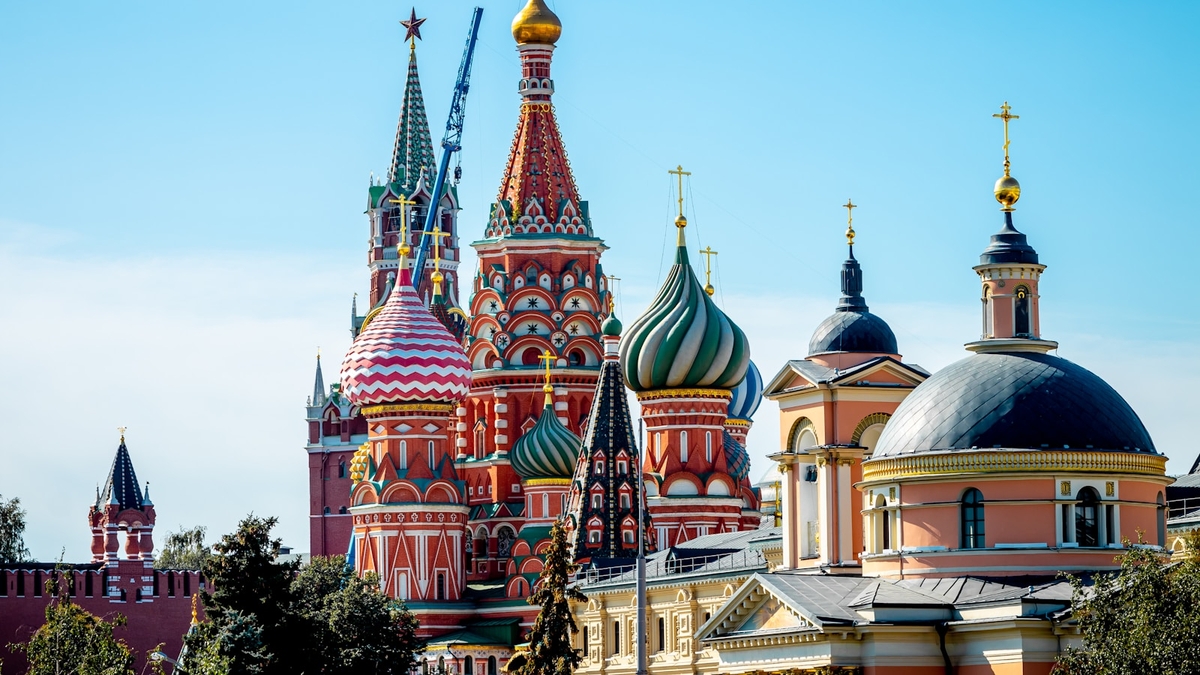
Photo by Artem Beliaikin on Unsplash
Russia Geopolitical Profile 2026
1. Executive Summary
Russia is a nuclear-armed permanent member of the UN Security Council and a major energy exporter, but after the 2022 full-scale invasion it moved into a wartime posture built around sanctions and isolation. 出典: IMF, Russian Federation and the IMF, World Bank, Russia Overview
Putin entered a fifth term after the 2024 presidential election, and Mikhail Mishustin was reappointed as prime minister. The public face of the system still includes elections and a bureaucracy, but real power is concentrated in the Kremlin and the security apparatus. 出典: AP News, Putin begins his fifth term as president, more in control of Russia than ever, AP News, Putin reappoints his prime minister, a technocrat who has kept a low political profile
The economy has not collapsed, but it is running with less slack. The World Bank expects growth of 0.9 percent in 2025 and about 1 percent in 2026 and 2027. The IMF projects 1.1 percent real growth and 5.6 percent consumer-price inflation in 2026. 出典: World Bank, Russia Overview, IMF, Russian Federation and the IMF
The right way to read Russia is not to ask whether it is simply strong or weak. The more useful question is how domestic control, the Ukraine war, nuclear signaling, resource diplomacy, and dependence on China, Iran, and North Korea appear in policy and in what order. 出典: AP News, Xi heads to Russia to show support for Putin as the Ukraine war drags on, AP News, North Korea says it sent troops to Russia and may send more to help in Ukraine war, AP News, Russia stages nuclear drills after the New START treaty expired earlier this year
       flowchart TD
  A["Kremlin"] --> B["Security organs"]
  A --> C["State firms"]
  A --> D["War budget"]
  B --> E["External coercion"]
  C --> E
  D --> E
2. Historical and Institutional Base
The Russian state sits on top of discontinuities: empire, revolution, the Soviet Union, the 1991 collapse, and the 1993 constitution. The consolidation of power after 2012, combined with the 2020 constitutional amendments that reset the term count, institutionalized Putin’s long rule. 出典: Fifth inauguration of Vladimir Putin
       timeline
  title Key turning points in the Russian state
  1991 : Soviet collapse
  1993 : New constitution
  2000 : Putin rises
  2020 : Term count reset
  2024 : Fifth term begins
  2026 : New START lapses
The system keeps the appearance of federalism, but in practice it prioritizes loyalty and control. Elections reinforce regime legitimacy, while the courts and media operate more as parts of regime maintenance than as independent oversight institutions.
3. Current Power Configuration
In today’s Russia, the line between foreign policy and security policy is thin. The Kremlin, the security organs, the Defense Ministry, the Foreign Ministry, state media, and state firms are linked vertically, so crisis response and external messaging move together. 出典: AP News, Putin reappoints his prime minister, a technocrat who has kept a low political profile
| Actor | Role | How to read it |
|---|---|---|
| Kremlin | Final coordination of strategy and personnel | Center of final authority |
| Prime Minister’s office | Fiscal, industrial, and administrative execution | Operating layer for wartime economics |
| Security organs | War, deterrence, and domestic monitoring | Core coercive capacity |
| Central bank | Inflation and rate management | Stability tool under sanctions |
| Parliament and courts | Formal institutions | Legitimacy support |
| Civil society and exiles | Limited pressure | Hard to turn into a domestic coalition |
Alexei Navalny died in custody in February 2024, and the remaining national opposition axis became even weaker. Opposition activity was pushed further into exile, prisons, and silence, and domestic competition fell sharply. 出典: AP News, Russian opposition leader Alexei Navalny has died, prison officials say
That means Russian politics cannot be explained by saying that the president is simply strong. More precisely, the presidency ties together the security apparatus and the state economy while shrinking the space in which opposition politics can form.
4. War, Nuclear Signaling, and External Relations
The Ukraine war remains the center of Russian foreign policy. NATO has published its support framework for Ukraine, and European deterrence remains organized around resistance to Russia. 出典: NATO, NATO’s support for Ukraine
The New START treaty expired in February 2026, and the last major nuclear arms-control framework became thinner still. Russia then staged nuclear force drills, keeping nuclear deterrence at the center of external pressure. 出典: The Washington Post, U.S.-Russia nuclear arms treaty expires after years of collapse, AP News, Russia stages nuclear drills after the New START treaty expired earlier this year
       flowchart LR
  A["Russia"] --> B["China"]
  A --> C["Iran"]
  A --> D["North Korea"]
  A --> E["NATO and Ukraine"]
China is the most important external pillar, while Iran and North Korea function as alternative channels under sanctions. Public reporting in 2025 and 2026 shows Russia deepening ties with those partners both to sustain the war and to reduce the pressure of sanctions. 出典: AP News, Xi heads to Russia to show support for Putin as the Ukraine war drags on, AP News, North Korea says it sent troops to Russia and may send more to help in Ukraine war
The China relationship is not an alliance, but it supports Russia through trade, technology, energy, and diplomacy. The North Korea relationship is even more dangerous because ammunition, personnel, engineering support, and reconstruction cooperation make Northeast Asia’s security environment more fragile. The Iran relationship is best read as a pairing of sanctions-hardened states that cover each other’s weak spots. 出典: AP News, North Korea says it sent troops to Russia and may send more to help in Ukraine war
5. Economy and Society Under Wartime Adaptation
Russia’s economy now runs on a distorted wartime pattern of demand. The World Bank expects slow growth in 2025 and 2026 because sanctions, lower energy prices, and high borrowing costs continue to weigh on activity. 出典: World Bank, Russia Overview
The central bank has prioritized inflation control, but borrowing costs are still high. Market reporting in June 2026 said the Russian central bank cut its policy rate to 14.25 percent, yet inflation and war demand pressures remained. 出典: The Wall Street Journal, Russia’s Central Bank Cuts Key Rate After Economy Contracts
Russian society is not one block. Metropolitan middle classes, low-wage regional workers, ethnic republics, defense-sector employees, exiles, and men of draft age all experience the war differently. Yet the regime combines censorship, policing, pensions, wage support, and state media to prevent dissatisfaction from turning into a political coalition. That is a public-information inference. 出典: AP News, Russian opposition leader Alexei Navalny has died, prison officials say
The result is that public sentiment should not be summarized in one word. Patriotism, war fatigue, silence, pragmatism, and exit all coexist, and the key question is not who supports the war but where people are unwilling to take risks.
6. Implications for Japan and East Asia
First, sanctions on Russia are not just a legal issue. They cut across procurement, insurance, shipping, payments, and export control, so Japanese firms need to check counterparties, ownership, end use, and third-country diversion as a single risk package. 出典: World Bank, Russia Overview, AP News, Xi heads to Russia to show support for Putin as the Ukraine war drags on
Second, energy is not only a price problem. Russian resources can reappear through third-country routing, blended cargoes, marine insurance, or financial intermediation, even when direct trade becomes harder. Japan’s risk management therefore has to follow the supply chain rather than just the country name. 出典: World Bank, Russia Overview
Third, military cooperation with North Korea worsens the deterrence environment around Japan. The more Russia absorbs North Korea’s capacity, the more closely the Korean Peninsula, the Sea of Japan, and the Russian Far East move together as a risk zone. 出典: AP News, North Korea says it sent troops to Russia and may send more to help in Ukraine war
Fourth, Russia is not fully fused with China, but rising dependence on China means East Asian security is shaped not only by U.S.-China rivalry but also by the strength of the Russia-China link. For Japan, that argues for a view that does not separate the China policy file from the Russia policy file too cleanly. 出典: AP News, Xi heads to Russia to show support for Putin as the Ukraine war drags on
7. Monitoring Points
If you want to read Russia as a country profile for news consumption, five indicators matter most.
- How the wear and tear of the Ukraine war feeds back into conscription, fiscal pressure, and internal security.
- Where the terms of trade with China shift, especially in energy, military industry, and digital technology.
- How cooperation with North Korea or Iran expands in weapons, ammunition, and sanctions evasion.
- How central-bank rates and inflation affect the durability of the wartime economy.
- Whether personnel changes or health issues inside the regime begin to reveal post-Putin sequencing.
These five indicators matter before any official statement does.
8. Risks and Limits
This profile has three limits. First, it relies on public information as of June 20, 2026, so battlefield shifts, sanctions, interest-rate changes, and foreign meetings can move the baseline quickly. Second, internal figures for nuclear forces, the security apparatus, and fiscal operations are opaque, so some conclusions are inference from public signals. Third, Russian public sentiment varies widely by region and class, so it should not be collapsed into a single national reaction.
As a matter of public-information inference, the near-term Russian pattern is likely to remain: keep the war going, absorb sanctions pressure through China and sanctions-evasion networks, and preserve bargaining power through nuclear deterrence. 出典: AP News, Xi heads to Russia to show support for Putin as the Ukraine war drags on, AP News, North Korea says it sent troops to Russia and may send more to help in Ukraine war, AP News, Russia stages nuclear drills after the New START treaty expired earlier this year
Reference Material
- IMF, Russian Federation and the IMF
- World Bank, Russia Overview
- NATO, NATO’s support for Ukraine
- AP News, Russia’s Putin reappoints Mishustin as prime minister in the first step of a new Kremlin government
- AP News, Russian opposition leader Alexei Navalny has died, prison officials say
- AP News, Xi heads to Russia to show support for Putin as the Ukraine war drags on
- AP News, North Korea says it sent troops to Russia and may send more to help in Ukraine war
- AP News, Russia stages nuclear drills after the New START treaty expired earlier this year
ロシアの国際政治プロファイル 2026年版
1. エグゼクティブサマリー
ロシアは、核兵器、国連安全保障理事会常任理事国、エネルギー輸出国という地位を持ちながら、2022年の全面侵攻以後は制裁と孤立を前提にした戦時体制へ移った。 出典: IMF, Russian Federation and the IMF, World Bank, Russia Overview
2024年の大統領選でプーチンは第五期に入り、ミハイル・ミシュスチンは首相に再任された。表向きは選挙と官僚制が残っていても、実権は大統領府と安全保障機構に強く集中している。 出典: AP News, Putin begins his fifth term as president, more in control of Russia than ever, AP News, Putin reappoints his prime minister, a technocrat who has kept a low political profile
経済は崩壊していないが、余力は細っている。世界銀行は2025年の成長率を0.9%と見込み、2026年と2027年も約1%成長を見込む。IMFは2026年の実質成長率を1.1%、消費者物価を5.6%と見積もる。 出典: World Bank, Russia Overview, IMF, Russian Federation and the IMF
したがって、ロシアを読む軸は「強いか弱いか」ではない。国内統制、ウクライナ戦争、核抑止、資源外交、そして中国・イラン・北朝鮮との相互依存が、どの順序で政策に現れるかを見ることにある。 出典: AP News, Xi heads to Russia to show support for Putin as the Ukraine war drags on, AP News, North Korea says it sent troops to Russia and may send more to help in Ukraine war, AP News, Russia stages nuclear drills after the New START treaty expired earlier this year
       flowchart TD
  A["大統領府"] --> B["安全保障機構"]
  A --> C["国営企業"]
  A --> D["戦時財政"]
  B --> E["対外強硬"]
  C --> E
  D --> E
2. 背景と制度の骨格
ロシア国家は、帝国、革命、ソ連、1991年の崩壊、1993年憲法という断層の上にある。2012年以降の権力集中と、2020年の憲法改正による任期計算のやり直しが、プーチンの長期統治を制度化した。 出典: Wikipedia, Fifth inauguration of Vladimir Putin
       timeline
  title ロシア国家の節目
  1991 : ソ連崩壊
  1993 : 新憲法
  2000 : プーチン台頭
  2020 : 任期計算のやり直し
  2024 : 第五期開始
  2026 : 新START失効後
この制度は、地方分権の外観を残しつつ、実際には忠誠と統制を優先する。選挙は政権の正統性を補強する儀式として機能し、司法とメディアは独立した監視装置というより、体制維持の一部として扱われる。
3. 現在の権力配置
現在のロシアでは、外交と安全保障の境界が薄い。大統領府、治安機構、国防省、外務省、国営メディア、国営企業が縦につながり、危機対応と対外メッセージが一体で動く。 出典: AP News, Putin reappoints his prime minister, a technocrat who has kept a low political profile
| アクター | 役割 | 読み方 |
|---|---|---|
| 大統領府 | 対外戦略と人事の最終調整 | 最終決定権の中心 |
| 首相府 | 財政、産業、行政の実装 | 戦時経済の運用窓口 |
| 安全保障機構 | 戦争、抑止、国内監視 | 実力部門の中核 |
| 中央銀行 | インフレと金利の管理 | 制裁下の安定装置 |
| 議会と裁判所 | 形式上の制度 | 正統性の補完 |
| 市民社会と亡命反対派 | 限定的な圧力 | 体制を揺らしにくい |
アレクセイ・ナワリヌイは2024年2月に収監先で死亡し、体制内に残っていた全国的野党の軸はさらに弱まった。反対派は国外、地下、獄中に分散し、国内政治の競争性は目に見えて低下した。 出典: AP News, Russian opposition leader Alexei Navalny has died, prison officials say
この構図は、ロシア政治を「大統領が強い」だけでは説明できないことを示す。正確には、大統領が安全保障機構と国営経済を束ね、反対派の空間を狭めることで、政策選択肢そのものを減らしている。
4. 戦争・核・対外関係
ウクライナ戦争は、ロシア外交の中心であり続ける。NATOはウクライナ支援の枠組みを公表し、欧州の抑止はロシアへの対抗軸として維持されている。 出典: NATO, NATO’s support for Ukraine
2026年2月に新START条約は失効し、核軍縮の最後の大枠はさらに細くなった。ロシアはその後も核戦力演習を行い、核抑止を対外圧力の中心に置き続けている。 出典: The Washington Post, U.S.-Russia nuclear arms treaty expires after years of collapse, AP News, Russia stages nuclear drills after the New START treaty expired earlier this year
       flowchart LR
  A["ロシア"] --> B["中国"]
  A --> C["イラン"]
  A --> D["北朝鮮"]
  A --> E["NATO・ウクライナ"]
中国との関係は最も重要な対外支柱であり、イランと北朝鮮は制裁下の代替回路として働く。2025年から2026年にかけての公表情報は、ロシアがこれらの相手国との連携を戦争遂行と制裁回避の両面で深めていることを示す。 出典: AP News, Xi heads to Russia to show support for Putin as the Ukraine war drags on, AP News, North Korea says it sent troops to Russia and may send more to help in Ukraine war
中国との関係は同盟ではないが、交易、技術、エネルギー、外交の四つでロシアを支える。北朝鮮との関係はさらに危険で、弾薬、兵員、工兵、再建支援の往復が、東アジアの安全保障環境を悪化させる。イランとの関係は、制裁慣れした国家どうしが互いの弱点を補う構図として読むのが妥当である。 出典: AP News, North Korea says it sent troops to Russia and may send more to help in Ukraine war
5. 経済・社会と戦時適応
ロシア経済は、戦争に合わせて歪んだ需要配分の上で動いている。世界銀行は、制裁の継続、低いエネルギー価格、借入コストの高さを前提に、2025年と2026年の成長率が鈍いとみている。 出典: World Bank, Russia Overview
中央銀行は物価抑制を優先してきたが、借り入れコストはなお高い。2026年6月の市場報道では、ロシア中銀は政策金利を14.25%に引き下げたが、物価と戦時需要の圧力は残ると報じられた。 出典: The Wall Street Journal, Russia’s Central Bank Cuts Key Rate After Economy Contracts
ロシア社会は一枚岩ではない。大都市の中間層、地方の低賃金層、少数民族地域、軍関連産業の労働者、亡命者、徴兵対象年齢の男性は、それぞれ戦争の受け止め方が違う。だが体制は、報道統制、治安、年金、賃上げ、国営メディアを組み合わせて、不満が政治連合に変わるのを防いでいる。これは公表情報からの推定である。 出典: AP News, Russian opposition leader Alexei Navalny has died, prison officials say
このため、市民の感情を一語でまとめるのは危険である。愛国、戦争疲れ、沈黙、実利、国外退避が混在しており、賛成か反対かではなく、どの領域でリスクを取らないかが重要になっている。
6. 日本・東アジアへの含意
第一に、対露制裁は法務だけではなく、調達、保険、海運、決済、輸出管理をまたぐ。日本企業は、相手先の実体、所有構造、最終用途、第三国迂回の可能性を一体で点検しないと、意図せぬ制裁違反を起こしやすい。 出典: World Bank, Russia Overview, AP News, Xi heads to Russia to show support for Putin as the Ukraine war drags on
第二に、エネルギーは価格だけの問題ではない。ロシア産資源は、直取引が難しくなっても、第三国経由、混合貨物、海上保険、金融仲介のどこかで再び現れる。日本のリスク管理は、調達先の国名よりも、サプライチェーンの経路を追う必要がある。 出典: World Bank, Russia Overview
第三に、北朝鮮との軍事協力は日本海側の抑止環境を悪化させる。ロシアが北朝鮮の能力を受け入れるほど、朝鮮半島、日本海、シベリア極東のリスクは連動しやすくなる。 出典: AP News, North Korea says it sent troops to Russia and may send more to help in Ukraine war
第四に、ロシアは中国と完全に一体化しているわけではないが、中国への依存が高まるほど、東アジアの安全保障は米中対立だけでなく、露中連携の強度にも左右される。日本にとっては、北方領土問題や海洋警備だけでなく、対中政策と対露政策を切り分けすぎない視点が必要である。 出典: AP News, Xi heads to Russia to show support for Putin as the Ukraine war drags on
7. 監視点
ロシアをニュース読解用の国別プロファイルとして見るなら、次の5点を定点観測するのがよい。
- ウクライナ戦争の消耗度が、徴兵、財政、治安にどう跳ね返るか。
- 中国との取引条件が、エネルギー、軍需、デジタル技術のどこで変わるか。
- 北朝鮮やイランとの連携が、兵器、弾薬、制裁回避のどこに広がるか。
- 中央銀行の金利とインフレが、戦時経済の持続力をどこまで削るか。
- 体制内部の人事や健康問題が、ポスト・プーチンの順序をどう示し始めるか。
この5点は、宣言よりも先に、ロシアの行動を変える。
8. リスク・限界
本稿の限界は三つある。第一に、2026年6月20日時点の公開情報に依拠しているため、戦況、制裁、金利、対外会談はすぐに前提を変えうる。第二に、核戦力、治安機構、財政の内部数字は不透明で、公開情報からの推定に頼る部分がある。第三に、ロシア社会の感情は地域差と階層差が大きく、全国を一つの反応でまとめるべきではない。
公表情報からの推定として、当面のロシアは「戦争を続けながら、制裁圧力を中国と制裁回避ネットワークで吸収し、核抑止で交渉力を維持する」方向を取りやすい。 出典: AP News, Xi heads to Russia to show support for Putin as the Ukraine war drags on, AP News, North Korea says it sent troops to Russia and may send more to help in Ukraine war, AP News, Russia stages nuclear drills after the New START treaty expired earlier this year
参考情報
- IMF, Russian Federation and the IMF
- World Bank, Russia Overview
- NATO, NATO’s support for Ukraine
- AP News, Russia’s Putin reappoints Mishustin as prime minister in the first step of a new Kremlin government
- AP News, Russian opposition leader Alexei Navalny has died, prison officials say
- AP News, Xi heads to Russia to show support for Putin as the Ukraine war drags on
- AP News, North Korea says it sent troops to Russia and may send more to help in Ukraine war
- AP News, Russia stages nuclear drills after the New START treaty expired earlier this year