Published
-
Rennyo and Ofumi: Letters That Turned Wartime Faith into Community
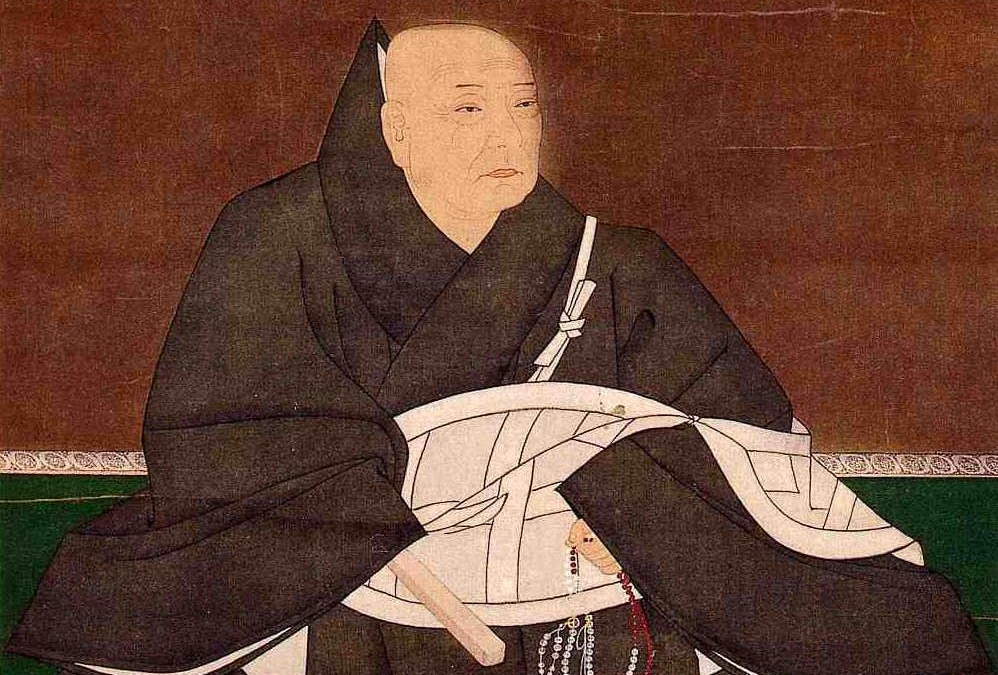
Image via Wikimedia Commons, public domain
1. Core Theme
Rennyo was the eighth head of Hongwanji who made Shinran’s teaching audible, readable, and socially repeatable for people living through war. His central medium was the letters called Gobunsho in the Hongwanji-ha tradition and Ofumi in the Otani-ha tradition. 出典: The Jodo Shinshu Hongwanji-ha Research Institute explains Gobunsho as Rennyo’s letters, written in plain language and sent to disciples across the country. See J-Soken, lecture on Gobunsho and Shonin ichiryu sho.
This report uses one theme: Ofumi turned wartime anxiety into the form of shinjin and community. Rennyo did not invent a new religion from zero. He took Shinran’s teaching centered on entrusting faith and tied it to short letters, daily liturgy, inscriptions of the Name, lay meetings, and temple-town organization.
flowchart LR A["War and anxiety"] --> B["Gobunsho / Ofumi"] B --> C["Shinjin clarified"] C --> D["Meetings and liturgy"] D --> E["Mondo community"]2. From a Poor Hongwanji to a Sengoku Center
Rennyo was born in 1415 at Otani Hongwanji in Kyoto’s Higashiyama district. He became a priest at seventeen, copied sacred writings in his twenties, assisted his father Zonnyo, and succeeded as the eighth Hongwanji leader in 1457 at the age of forty-three. 出典: Hongwanji-ha’s statement for Rennyo’s 500th memorial summarizes his birth, ordination, copying of sacred writings, and succession at age forty-three. See Hongwanji-ha, memorial message on Rennyo.
Hongwanji at his succession was not yet the later large institution. The Higashiyama temple stood inside older Tendai-centered religious authority, and Shinshu lineages were divided across regions. Rennyo’s success in Omi provoked the Enryakuji establishment on Mount Hiei. In 1465 warrior monks attacked Otani Hongwanji and destroyed buildings, forcing Rennyo to flee. 出典: Hongwanji’s English history says Hongwanji became the center of Jodo Shinshu only in Rennyo’s time and notes the 1465 attack by Mount Hiei warrior monks. See Hongwanji, History.
The Onin-Bunmei War then broke Kyoto. The civil war began in 1467 and lasted until 1477. Afterward, the Muromachi bakufu lost nationwide authority and warfare spread across regions. Kyoto saw fortifications, refugee life, epidemics, fires, and early forms of urban self-defense. Rennyo’s mission unfolded in the same age of damaged urban and provincial order. 出典: Kyoto City’s urban history describes the Onin-Bunmei War from 1467 to 1477 and explains that after it the bakufu lost nationwide influence and Japan moved into the Sengoku age. See Kyoto City, Onin-Bunmei War.
3. Yoshizaki Made Ofumi a Community Medium
In 1471 Rennyo moved his base to Yoshizaki in Echizen. There he joined letters, inscriptions of the Name, Shoshinge-Wasan, and lay meetings. His stay lasted only about four years, until 1475, but it became decisive for Hongwanji expansion. The Fukui Prefectural History treats this period as a turning point because new texts, name inscriptions, mass distribution, and the first Hokuriku Ikko ikki appeared together. 出典: The Fukui Prefectural History explains that Rennyo’s Yoshizaki years saw mass distribution of Name inscriptions, publication of Shoshinge-Wasan, Ofumi activity, and the first Hokuriku Ikko ikki. See Fukui Prefectural History, Six-character Name, Shoshinge-Wasan, Ofumi.
The letters worked because they made doctrine short enough to read aloud. The Research Institute says more than two hundred of Rennyo’s letters circulated, and in Jitsunyo’s time eighty were compiled into five fascicles. In the Hongwanji-ha tradition, reading Gobunsho after Shoshinge-Wasan remains part of ordinary daily service. 出典: The Research Institute explains that Rennyo wrote more than two hundred letters, that eighty were later compiled into five fascicles, and that Gobunsho reading became linked to daily service. See J-Soken, lecture on Gobunsho and Shonin ichiryu sho.
The contents vary, but the center is stable. First, Rennyo places the root of birth in the Pure Land in shinjin. Second, he treats the nenbutsu not as a practice that buys salvation, but as gratitude after receiving Amida’s vow. Third, he returns doctrine to ordinary settings: death, impermanence, family, meetings, relations with other sects, and relations with worldly authority.
4. Thought in the Shonin Ichiryu Letter
Rennyo’s doctrinal core is shinjin sho'in, faith as the true cause, and shomyo hoon, saying the Name in gratitude. The Shonin ichiryu letter puts Shinran’s teaching in faith and says that when a person abandons miscellaneous practices and entrusts to Amida, birth is settled from the side of the Buddha. The nenbutsu that follows is understood as grateful response. 出典: The Research Institute divides the Shonin ichiryu letter into faith as the true cause and saying the Name in gratitude. See J-Soken, lecture on Gobunsho and Shonin ichiryu sho.
This mattered for people in Rennyo’s world. It moved salvation away from temple ritual, amount of practice, status, and learning as exclusive measures, and placed it in entrusting Amida’s vow. Rennyo did not preserve Shinran’s thought as abstract doctrine alone. He gave listeners language through which they could hear it inside their own life and death.
Another famous example is the letter known as White Ashes. It looks at human life as fragile, tells listeners that age gives no fixed order of death, and urges them to entrust to Amida and say the nenbutsu. For people living amid war, disease, fire, and displacement, the letter made death a matter of today’s body and family rather than a distant idea. 出典: Wikisource presents White Ashes as the sixteenth letter of the fifth fascicle, using the Japanese translation of the Buddhist canon as its base text. See Wikisource, White Ashes.
5. Meetings, Lay Associations, and Ikki Tension
Ofumi was not written only for private reading. Followers gathered in ko and other meetings, chanted Shoshinge-Wasan, heard the letters read, and checked their meaning. Faith grew as a relationship among people sitting in the same place. Hongwanji-ha’s memorial statement links Rennyo’s plain letters with his habit of discussing the Dharma on the same floor with followers. 出典: Hongwanji-ha’s memorial statement says Rennyo spoke with people on the same floor and taught in plain Gobunsho letters. See Hongwanji-ha, memorial message on Rennyo.
The expanding follower community could not stay outside politics. In Echizen and Kaga, armies tied to the Onin-Bunmei conflict, the Togashi house, the Asakura, and the Kai moved through the same region. The Fukui Prefectural History describes Yoshizaki during Rennyo’s stay as dangerous and tense. One striking point is that the letters barely discuss the detailed political situation, while people still came to Yoshizaki amid battles. 出典: The Fukui Prefectural History says Yoshizaki during Rennyo’s stay lay amid Onin-Bunmei conflict and regional troop movement, while the letters almost never mention the local political situation. See Fukui Prefectural History, Kaga Ikko ikki in Bunmei 6.
It is misleading to portray Rennyo as a simple commander of the Ikko ikki. He organized followers with enormous force, and Hongwanji followers became a political presence in local society. At the same time, he tried to restrain followers from violence and political conflict, and his departure from Yoshizaki belonged to that tension. Hongwanji’s English history says he withdrew when the movement became entangled in violent rioting and he could not restrain his followers. 出典: Hongwanji’s English history explains that Hongwanji-related temples and followers around Yoshizaki became a political force and that Rennyo chose to leave when the movement became entangled in violent rioting. See Hongwanji, History.
6. Yamashina, Ishiyama, and Death
After leaving Yoshizaki, Rennyo returned to the Kinai region. In 1478 he selected Yamashina southeast of Kyoto as the place to rebuild Hongwanji. Around 1483 the temple complex was completed, and a temple town grew around it. After handing administration to Jitsunyo at age seventy-five, Rennyo continued teaching. At eighty-two he established a temple at Ishiyama on Osaka Bay, using a site suited to river traffic and propagation. 出典: Hongwanji’s English history says Rennyo selected Yamashina in 1478, completed a large temple complex five years later, continued teaching after retirement, and established Ishiyama at age eighty-two. See Hongwanji, History.
Rennyo died on the twenty-fifth day of the third month of Meio 8, 1499, at the age of eighty-five. Hongwanji-ha presents him as the person who laid the foundation of the modern Hongwanji tradition and continued teaching until death. 出典: Hongwanji-ha’s memorial statement says Rennyo retired at seventy-five and continued teaching until his death in Meio 8, at age eighty-five. See Hongwanji-ha, memorial message on Rennyo.
Rennyo’s influence cannot be measured only as simplified doctrine. He created places to read, chant, gather, and support a temple. Gobunsho was doctrinal explanation, community discipline, language for facing death, and a medium that connected Hongwanji to local society. In wartime Japan, that medium gave people a form of belonging beyond military force and bloodline.
Sources
1. このレポートの軸
蓮如を一言でいえば、親鸞の教えを戦乱期の生活者が聞き、読み、集まって確かめられる形に作り替えた本願寺第八代である。彼の中心手段が『御文章』、真宗大谷派でいう『御文』だった。 出典: 浄土真宗本願寺派総合研究所は、『御文章』を蓮如が作った手紙で、平易な言葉で教えを説き、全国の門弟へ届けられたものと説明している。総合研究所「『御文章』聖人一流章」 を参照。
本稿のテーマは「御文という媒体が、戦乱期の不安を信心と共同体のかたちへ変えた」である。蓮如は新しい教義を一から作った人ではない。親鸞の信心中心の教えを、短い手紙、勤行、名号、講の寄合、寺内町の形成と結びつけ、広い層が参加できる宗教運動へ変えた。
flowchart LR A["戦乱と不安"] --> B["御文章・御文"] B --> C["信心の確認"] C --> D["講と勤行"] D --> E["門徒共同体"]2. 貧しい本願寺から戦国期の中心へ
蓮如は応永二十二年、一四一五年に京都東山大谷の本願寺で生まれた。十七歳で得度し、二十代から聖教を書写して授与し、父である第七代存如を補佐した。四十三歳の一四五七年に法灯を継ぎ、本願寺第八代となった。 出典: 本願寺派の五百回遠忌消息は、蓮如の誕生、得度、聖教書写、四十三歳での継職をまとめている。本願寺派「蓮如上人五百回遠忌法要についての消息」 を参照。
継職時の本願寺は、後世の巨大教団とは違う。京都東山の本願寺は天台宗系の権威圏に置かれ、地方の真宗門流も複数に分かれていた。蓮如が近江へ教線を広げると、比叡山延暦寺の武装僧が一四六五年に大谷本願寺を襲い、建物を破却した。蓮如は京都周辺を転々とし、宗教的成功が既存寺社の利害と衝突する現実を早くから経験した。 出典: 本願寺派英語史は、蓮如期に本願寺が天台組織から独立した浄土真宗の中心となり、一四六五年に比叡山の武装僧が本願寺を襲ったと説明する。Hongwanji, History を参照。
その直後に応仁・文明の乱が京都を壊した。一四六七年に始まった内乱は、一四七七年まで続き、戦後の幕府は全国への影響力を失って各地の戦闘が広がった。京都では防御施設、避難生活、疫病、火災、町の自治組織が同時に現れた。蓮如の伝道は、こうした都市と地方の秩序が揺らぐ時代に重なった。 出典: 京都市の都市史は、応仁・文明の乱を一四六七年から一四七七年までの内乱として説明し、乱後に幕府が全国的影響力を失い戦国時代へ向かったと述べる。京都市「応仁・文明の乱」 を参照。
3. 吉崎で御文が共同体の媒体になった
一四七一年、蓮如は越前吉崎に拠点を移した。ここで彼は御文、名号、正信偈和讃、講の寄合を組み合わせる。吉崎滞在は一四七五年までの約四年間にすぎないが、本願寺門徒の広がりにとって決定的な時期になった。福井県史は、この時期に新しい教典類や名号の制定と大量下付が始まり、北陸最初の一向一揆も起きたと位置づける。 出典: 福井県史は、吉崎滞在中に名号の大量下付、正信偈和讃の開版、御文の運用が進み、北陸一向衆にとって画期になったと説明する。福井県史「六字名号・正信偈和讃・御文」 を参照。
御文の強みは、教義を短く、声に出して読める形にした点にある。総合研究所は、蓮如の御文章が二百通を超え、九代実如のころに五帖八十通の形でまとまったと説明する。いま本願寺派では、正信偈和讃のあとに御文章を拝読する日常勤行の形が定められている。 出典: 総合研究所は、蓮如の御文章が二百通を超え、実如期に五帖八十通としてまとめられ、勤行後の拝読に結びついたと説明する。総合研究所「『御文章』聖人一流章」 を参照。
『御文章』の中身は多様だが、軸ははっきりしている。第一に、救いの根本を信心に置く。第二に、念仏を往生を買い取る行為ではなく、阿弥陀の本願を受けたよろこびの表れとして読む。第三に、死、無常、家族、寄合、他宗・権力との関係など、日々の場面に教義を戻す。
4. 「聖人一流章」が示す思想
蓮如思想の要点は「信心正因」と「称名報恩」である。『聖人一流章』は、親鸞の勧化の趣旨を信心に置き、雑行を捨てて弥陀に帰命すれば、仏の側から往生が定まると説く。念仏は、そのあとに仏恩を報じる称名として理解される。 出典: 総合研究所は「聖人一流章」を、前半の信心正因と後半の称名報恩に分けて読む。総合研究所「『御文章』聖人一流章」 を参照。
この整理は、当時の人びとにとって大きかった。救いを寺院儀礼、修行量、身分、学問だけに閉じ込めず、阿弥陀の本願をたのむ信心へ移したからである。蓮如は、親鸞の思想を抽象教義として保存したのではなく、聞き手が自分の生死と生活の言葉で受け取れるようにした。
もう一つの代表例が「白骨の御文」である。ここでは、人間の一生をはかないものとして見つめ、老少不定の身であるから後生の一大事を心にかけ、阿弥陀仏をたのんで念仏するよう促す。戦乱、疫病、火災、流亡を経験する人びとにとって、これは死を遠い観念にせず、今日の身体と家族の問題として迫る言葉だった。 出典: Wikisource掲載の「白骨の御文」は、底本を国訳大蔵経に置き、五帖目第十六通として本文を掲げる。Wikisource「白骨の御文」 を参照。
5. 講、寄合、そして一揆との緊張
御文は個人の読書だけを想定した文章ではない。門徒は講や寄合で集まり、正信偈和讃を唱え、御文を拝読し、意味を確かめた。ここで信仰は、同じ場に座る人びとの関係として育った。蓮如は平座で人びとと仏法を談合したと伝えられ、本願寺派の遠忌消息も、同朋の精神と御文章による平易な教化を結びつけている。 出典: 本願寺派の五百回遠忌消息は、蓮如が平座で人びとと仏法を談合し、平易な御文章で教えを説いたと述べる。本願寺派「蓮如上人五百回遠忌法要についての消息」 を参照。
ただし、門徒共同体の拡大は政治から自由ではなかった。越前・加賀では、応仁・文明の乱に連動して東西両軍や富樫氏、朝倉氏、甲斐氏の軍事行動が交差した。福井県史は、吉崎の周囲が緊張に満ちた危険な日々だったと書く。興味深いのは、御文が政治情勢を細かく論じない一方で、人びとが激戦の合間にも吉崎へ群参した点である。 出典: 福井県史は、吉崎滞在期が応仁・文明の乱の最中で、越前・加賀の兵馬が行き交った一方、一連の御文には政治情勢への言及がほとんどないと指摘する。福井県史「文明六年加賀一向一揆」 を参照。
蓮如を一向一揆の単純な首謀者として描くと、彼の位置を誤る。彼は門徒を強力に組織し、在地社会に大きな影響力を持った。その結果、本願寺門徒は政治勢力としても扱われた。一方で蓮如は、門徒が暴力と政治抗争に巻き込まれることを制御しようとし、吉崎を去る判断もした。本願寺派英語史は、運動が暴動に巻き込まれ、蓮如が信徒を抑えられないと見て退去したと説明する。 出典: 本願寺派英語史は、吉崎で本願寺系寺院と周辺地域の門徒が政治勢力となり、軍事利用や政治同盟の動きが生じ、蓮如が退去を選んだと説明する。Hongwanji, History を参照。
6. 山科、石山、そして死
吉崎を去った後、蓮如は畿内へ戻り、一四七八年に京都南東の山科を本願寺再建の地に選んだ。山科本願寺は一四八三年ごろに大伽藍として整い、周囲に寺内町を育てた。七十五歳で実如へ寺務を譲った後も、蓮如は教化を続けた。八十二歳には大坂石山に坊舎を建て、水上交通の要地を伝道拠点にした。 出典: 本願寺派英語史は、蓮如が一四七八年に山科を選び、五年後に寺院複合を完成させ、七十四歳で隠退後も教化を続け、八十二歳で石山坊舎を建てたと説明する。Hongwanji, History を参照。
明応八年、一四九九年三月二十五日、蓮如は八十五歳で生涯を終えた。本願寺派は、彼が往生まで教化を続け、今日の宗門本願寺の礎を築いたと位置づける。 出典: 本願寺派の五百回遠忌消息は、蓮如が七十五歳で隠退し、明応八年三月二十五日に八十五歳で往生するまで教化を続けたと述べる。本願寺派「蓮如上人五百回遠忌法要についての消息」 を参照。
蓮如の影響は、教義の平易化だけでは測れない。彼は、手紙を読む場、声に出す場、集まる場、寺を支える場を作った。『御文章』は、信心の説明であり、共同体の規律であり、死に向き合う言葉であり、本願寺を地方社会へ接続する媒体だった。戦乱期の日本で、この媒体は、武力や血縁だけではない結合の形を人びとに与えた。