Published
-
France Geopolitical Profile 2026
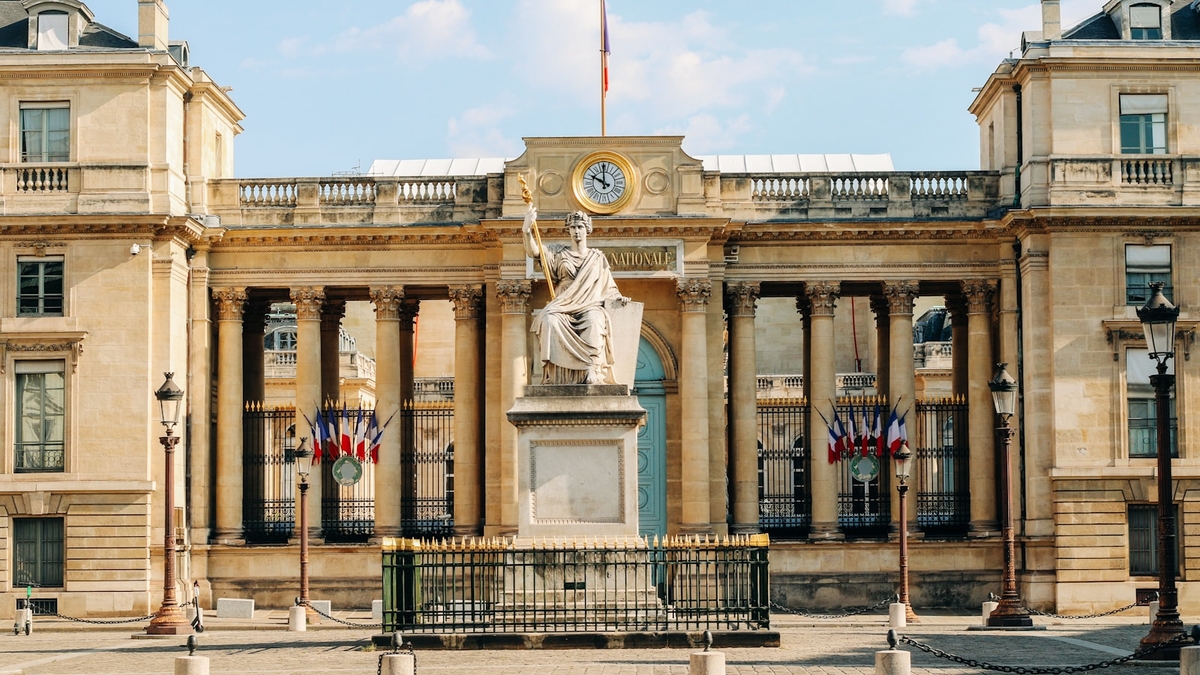
Photo by Eddie Junior on Unsplash
France Geopolitical Profile 2026
1. Executive Summary
France combines nuclear weapons, a permanent UN Security Council seat, institutional weight inside the EU, and an Indo-Pacific foothold through overseas territories. 出典: France Diplomatie, Indo-Pacific strategy and Élysée, Ukraine security guarantees support this framing.
Yet French politics in 2026 combines a strong presidency with a weak parliamentary majority. Under President Emmanuel Macron, Prime Minister Sébastien Lecornu runs the government, while the National Assembly is split among the National Rally, presidential groups, the left, Socialists, and conservative right. 出典: info.gouv.fr, Composition du Gouvernement lists Lecornu as prime minister, and Assemblée nationale, Effectif des groupes politiques shows a fragmented chamber, including National Rally 122, Ensemble 91, LFI-NFP 71, and Socialist-linked groups 68.
       flowchart LR
  A["Presidency"] --> B["EU and security"]
  A --> C["Fiscal policy"]
  D["Fragmented parliament"] --> C
  D --> E["Migration and secularism"]
  B --> F["Ukraine and NATO"]
  B --> G["Africa and Indo-Pacific"]
France should not be read only as a strong state pushing European integration. At home, immigration, secularism, security, purchasing power, agriculture, pensions, and deficits create conflict lines. Abroad, EU strategic autonomy, NATO, Ukraine support, former colonial ties, and overseas territories widen the policy map.
2. Historical and Institutional Frame
Modern French politics rests on the 1789 Revolution, the Fifth Republic, memories of the Algerian War, European integration, nuclear deterrence, and post-colonial ties with Africa. The Fifth Republic gives the president a large voice in foreign and security policy, but budgets, migration, welfare, agriculture, and local administration remain constrained by parliament and social protest.
       timeline
  title French political milestones
  1789 : French Revolution
  1958 : Fifth Republic
  1960s : Decolonization
  1992 : Maastricht Treaty
  2017 : Macron presidency
  2024 : Fragmented assembly after snap election
  2026 : Fiscal constraint under Lecornu government
This system amplifies the president’s voice during crises, while ordinary politics keeps searching for a workable majority. The presidential election indicates national direction; the National Assembly narrows that direction through annual budgets and laws.
3. Power Map
The National Rally is a major opposition force linking immigration, security, purchasing power, and local alienation. The left links living costs, public services, climate, anti-discrimination, and youth frustration. The center and presidential camp emphasize Europe, business, fiscal discipline, and reform, but cannot unite society alone.
| Actor | 2026 reading |
|---|---|
| Élysée | Sets direction on diplomacy, security, and Europe |
| Lecornu government | Connects budget and administration in a divided chamber |
| National Rally | Increases right-wing pressure on migration, security, purchasing power |
| Left and Socialists | Build resistance around welfare, public services, secularism, climate |
| Conservative right and center | Decide issue-by-issue majorities on budgets, security, industry |
In this power map, grand foreign-policy language can outrun domestic implementation. Ukraine support, defense spending, EU industrial policy, and Africa policy can all be affirmed at summits, then pulled back into domestic disputes over money, security, farming, immigration, and purchasing power.
4. Migration, Secularism, and Social Protest
Migration politics often compresses labor needs, refugee protection, security, Islam, republicanism, and local reception capacity into one argument. The OECD reports that first asylum applications in 2024 fell to around 131,000, with Ukraine, Afghanistan, and the Democratic Republic of Congo among the leading origins. 出典: OECD, International Migration Outlook 2025: France
Secularism is not simply a principle for removing religion from public space. It is a political language about schools, religious symbols, public service, immigrant integration, anti-discrimination, and freedom of expression. Right, left, and center all invoke republicanism, but they attach different meanings to it.
Social protest is not an exception in French politics; it is part of the system. Protests over farming, pensions, fuel prices, universities, policing, and climate show veto power that cannot be measured only by parliamentary arithmetic. Reading France in 2026 requires putting seat counts and street mobilization on the same political map.
5. EU, NATO, and Ukraine
France speaks about EU strategic autonomy, but it cannot make NATO and the United States irrelevant. On Ukraine, France is trying to connect security guarantees, long-term defense cooperation, and the European defense industry. 出典: Élysée, Paris Declaration on robust security guarantees for Ukraine, and Élysée, joint statement of France, the United Kingdom, Germany and Ukraine
Strategic autonomy is not anti-Americanism; it is a way for Europe to widen its diplomatic, defense, and industrial options. France has nuclear deterrence and expeditionary capacity, but ammunition, missile defense, satellites, procurement, and eastern defense all require allies.
6. Africa, Francophonie, and the Indo-Pacific
Relations with former colonies are not a choice between rupture and continuity. Even after military retrenchment in the Sahel and anti-French sentiment, France still tries to preserve influence through language, education, currency links, companies, migration, cultural institutions, and international organizations. In 2026 Africa policy, relations with English-speaking countries such as Kenya matter alongside the francophone sphere. 出典: OIF and Le Monde, Africa-France summit in Nairobi
In the Indo-Pacific, France is not an outside observer. Overseas territories such as Réunion, Mayotte, New Caledonia, and French Polynesia give France a basis for sovereignty, maritime security, disaster response, and regional cooperation. 出典: France Diplomatie, Indo-Pacific strategy places overseas territories at the center of the strategy.
7. Fiscal Space, Industry, and Nuclear Energy
France combines weak growth, high public debt, strong social spending, and industrial strengths in aerospace, defense, agriculture, luxury goods, and nuclear power. The European Commission projects 0.8% real GDP growth in 2026 and a government deficit of around 5.1% of GDP. 出典: European Commission, Economic forecast for France
Fiscal constraint directly affects foreign policy. There is limited room to expand defense spending, Ukraine support, farm aid, industrial subsidies, energy investment, and welfare at the same time. Banque de France projected in June 2026 that the public debt ratio would move toward 122% by the end of 2028. 出典: Banque de France, Macroeconomic projections - June 2026
Nuclear power connects French climate policy, industrial policy, and energy security. RTE reports that nuclear generation recovered to 361.7 TWh in 2024, making nuclear power central again in debates over electricity prices, industrial competitiveness, and EU climate policy. 出典: RTE, Nuclear power generation in France
8. Japan’s Reading
For Japan, France is an EU rule-maker, an Indo-Pacific territorial power, and a partner shaping European decisions on Ukraine support and defense industry. In the Indo-Pacific strategy, France names Japan as one of its priority partners, and the first industrial rare-earth separation project in New Caledonia also shows Japanese co-investment. 出典: France Diplomatie, France’s Indo-Pacific Strategy supports this reading.
At the same time, fragmented domestic politics means that implementation cannot be predicted from leader-level agreements alone.
Three questions matter. First, can France fund defense and industrial policy despite a fragmented parliament? Second, can the center preserve foreign-policy continuity between National Rally and left-wing pressure? Third, can France maintain enough administrative capacity and fiscal space to operate in Africa, the Indo-Pacific, the EU, and NATO at the same time?
France is easiest to read as a country with a strong president and a weak majority. Its international voice is large, but every implementation round brings parliament, protest, fiscal limits, local government, and former colonial ties back into the story.
フランスの国際政治プロファイル 2026年版
1. エグゼクティブサマリー
フランスは、核兵器、国連安保理常任理事国の地位、EU中核国としての制度力、海外領土に基づくインド太平洋の足場を同時に持つ。 出典: France Diplomatie, Indo-Pacific strategy と Élysée, Ukraine security guarantees を参照した。
しかし2026年のフランス政治は、強い大統領制と弱い議会多数派が同居する状態にある。エマニュエル・マクロン大統領の下で、セバスチャン・ルコルニュ首相が政権を運営し、国民議会は国民連合、与党系会派、左派、社会党、共和右派などに割れている。 出典: info.gouv.fr, Composition du Gouvernement はルコルニュ首相を掲載し、Assemblée nationale, Effectif des groupes politiques は国民連合122、与党系 Ensemble 91、LFI-NFP 71、社会党系68などの分裂を示す。
       flowchart LR
  A["大統領制"] --> B["EU・安全保障"]
  A --> C["財政運営"]
  D["分裂議会"] --> C
  D --> E["移民・世俗主義"]
  B --> F["ウクライナ・NATO"]
B --> G["アフリカ・インド太平洋"]ニュースを読むときは、フランスを「欧州統合を進める強い国家」とだけ見ない方がよい。国内では移民、世俗主義、治安、購買力、農業、年金、財政赤字が対立軸をつくり、国外ではEU戦略的自律、NATO、ウクライナ支援、旧植民地関係、海外領土が政策の射程を広げている。
2. 歴史と制度の骨格
現代フランス政治は、1789年革命、第五共和政、アルジェリア戦争の記憶、欧州統合、核抑止、脱植民地化後のアフリカ関係を重ねてできている。第五共和政は大統領に外交・安全保障の大きな発信力を与えるが、予算、移民、社会保障、農業、地方行政は議会と社会運動に強く制約される。
       timeline
  title フランス政治の節目
  1789 : フランス革命
  1958 : 第五共和政
  1960s : 脱植民地化
  1992 : マーストリヒト条約
  2017 : マクロン政権
  2024 : 解散総選挙後の分裂議会
  2026 : ルコルニュ政権下の予算制約
この制度は危機時に大統領の声を大きくする一方、通常政治では「実行できる多数派」を探し続ける構造を生む。大統領選挙が国家の方向を示し、国民議会が毎年の予算と法律でその方向を絞り込む。
3. 権力配置
国民連合は、移民、治安、購買力、地方の疎外感を束ねる最大級の野党勢力である。左派は生活費、公共サービス、気候、反差別、若年層の不満を束ねる。中道・与党系は欧州、企業、財政規律、改革を掲げるが、単独で社会をまとめ切れない。
| アクター | 2026年時点の読み方 |
|---|---|
| 大統領府 | 外交・安全保障・欧州政策の方向を示す |
| ルコルニュ政権 | 分裂議会で予算と行政運営をつなぐ |
| 国民連合 | 移民、治安、購買力で右派圧力を強める |
| 左派・社会党系 | 社会保障、公共サービス、世俗主義、気候で抵抗軸をつくる |
| 共和右派・中道 | 予算、治安、産業政策で案件ごとの多数派を左右する |
この権力配置では、外交の大きな言葉と国内実装の細さがずれやすい。ウクライナ支援、国防費、EU産業政策、アフリカ政策のどれも、国際会議では継続を語れても、国内では財源、治安、農業、移民、購買力の争点に戻される。
4. 移民、世俗主義、社会抗議
移民問題は、労働力、難民保護、治安、イスラム、共和主義、地方自治体の受け入れ能力が同じ言葉に押し込まれやすい。OECDは2024年の初回庇護申請が約13万1000件で、ウクライナ、アフガニスタン、コンゴ民主共和国からの申請が多かったと整理している。 出典: OECD, International Migration Outlook 2025: France
世俗主義は、宗教を公共空間から消すだけの原則ではない。学校、宗教シンボル、公務、移民統合、反差別、表現の自由をめぐって、国家がどこまで中立を求めるかを問う政治言語である。そのため右派、左派、中道はいずれも「共和主義」を語るが、含意は異なる。
社会抗議もフランス政治の例外ではなく、制度の一部である。農業、年金、燃料価格、大学、警察、気候をめぐる抗議は、議会内の数合わせだけでは測れない拒否権を示す。2026年の読解では、国民議会の議席数と街頭の動員を同じ政治地図に置く必要がある。
5. EU、NATO、ウクライナ
フランスはEU戦略的自律を語るが、NATOと米国を不要にできるわけではない。ウクライナ支援では、フランスは安全保証、長期防衛協力、欧州の防衛産業を結びつけようとしている。 出典: Élysée, Paris Declaration on robust security guarantees for Ukraine、Élysée, joint statement of France, the United Kingdom, Germany and Ukraine を参照した。
戦略的自律は反米主義ではなく、欧州が外交・防衛・産業の選択肢を増やす発想である。フランスは核抑止と遠征能力を持つが、弾薬、ミサイル防衛、衛星、調達、東欧防衛では同盟国との連携が欠かせない。
6. アフリカ、フランコフォニー、インド太平洋
旧植民地との関係は、断絶か継続かの二択ではない。サヘルでの軍事的後退や反仏感情があっても、フランスは言語、教育、通貨、企業、移民、文化機関、国際機関を通じた影響力を維持しようとする。2026年のアフリカ政策では、フランコフォン圏だけでなく、ケニアのような英語圏との関係づくりも重要になっている。 出典: OIF と Le Monde, Africa-France summit in Nairobi を参照した。
インド太平洋では、フランスは域外の観察者ではない。レユニオン、マヨット、ニューカレドニア、仏領ポリネシアなどの海外領土が、主権、海洋安全保障、災害対応、地域協力の根拠になる。 出典: France Diplomatie, Indo-Pacific strategy は海外領土を戦略の中心に置く。
7. 財政、産業、原子力
フランス経済は、低成長、高い公的債務、強い社会支出、航空宇宙・防衛・農業・高級品・原子力の産業基盤を同時に抱える。欧州委員会は2026年の実質GDP成長率を0.8%、政府赤字をGDP比5.1%と見込んでいる。 出典: European Commission, Economic forecast for France を参照した。
財政制約は外交にも直結する。国防費、ウクライナ支援、農業支援、産業補助、エネルギー投資、社会保障を同時に増やす余地は限られる。Banque de France は2026年6月の見通しで、公的債務比率が2028年末に122%へ向かうと予測している。 出典: Banque de France, Macroeconomic projections - June 2026
原子力は、フランスの気候政策、産業政策、エネルギー安全保障をつなぐ基盤である。RTEは2024年に原子力発電が361.7TWhへ回復したと整理しており、電力価格、産業競争力、EU気候政策の議論で原子力は中心に戻っている。 出典: RTE, Nuclear power generation in France
8. 日本からの読み方
日本にとってフランスは、EU規制の形成国であり、インド太平洋の領土保有国であり、ウクライナ支援と防衛産業で欧州の意思決定を動かす相手である。インド太平洋戦略では日本を優先パートナーの一つに置き、新カレドニアの初の工業用レアアース分離案件でも日本との共同出資が見える。 出典: France Diplomatie, France’s Indo-Pacific Strategy を参照した。
同時に、国内政治が分裂しているため、首脳間合意だけで政策の実装を予測すると外しやすい。
見るべき問いは三つある。第一に、分裂議会でも国防と産業政策の財源を確保できるか。第二に、国民連合と左派の圧力の間で中道が外交継続を保てるか。第三に、アフリカ、インド太平洋、EU、NATOを同時に動かすだけの行政能力と予算余地を維持できるかである。
フランスは「強い大統領」と「弱い多数派」の国として読むと見通しやすい。国際政治の発信力は大きいが、実装のたびに議会、街頭、財政、地方、旧植民地関係が戻ってくる。